
4SA has secured Listed Building Consent from Westminster City Council for a heritage-led refresh of the common parts at 100 Pall Mall, a Grade II listed mid-century office building within the St James's Conservation Area. The project repositions the building for contemporary office occupiers while honouring the integrity of Donald McMorran's original interior.
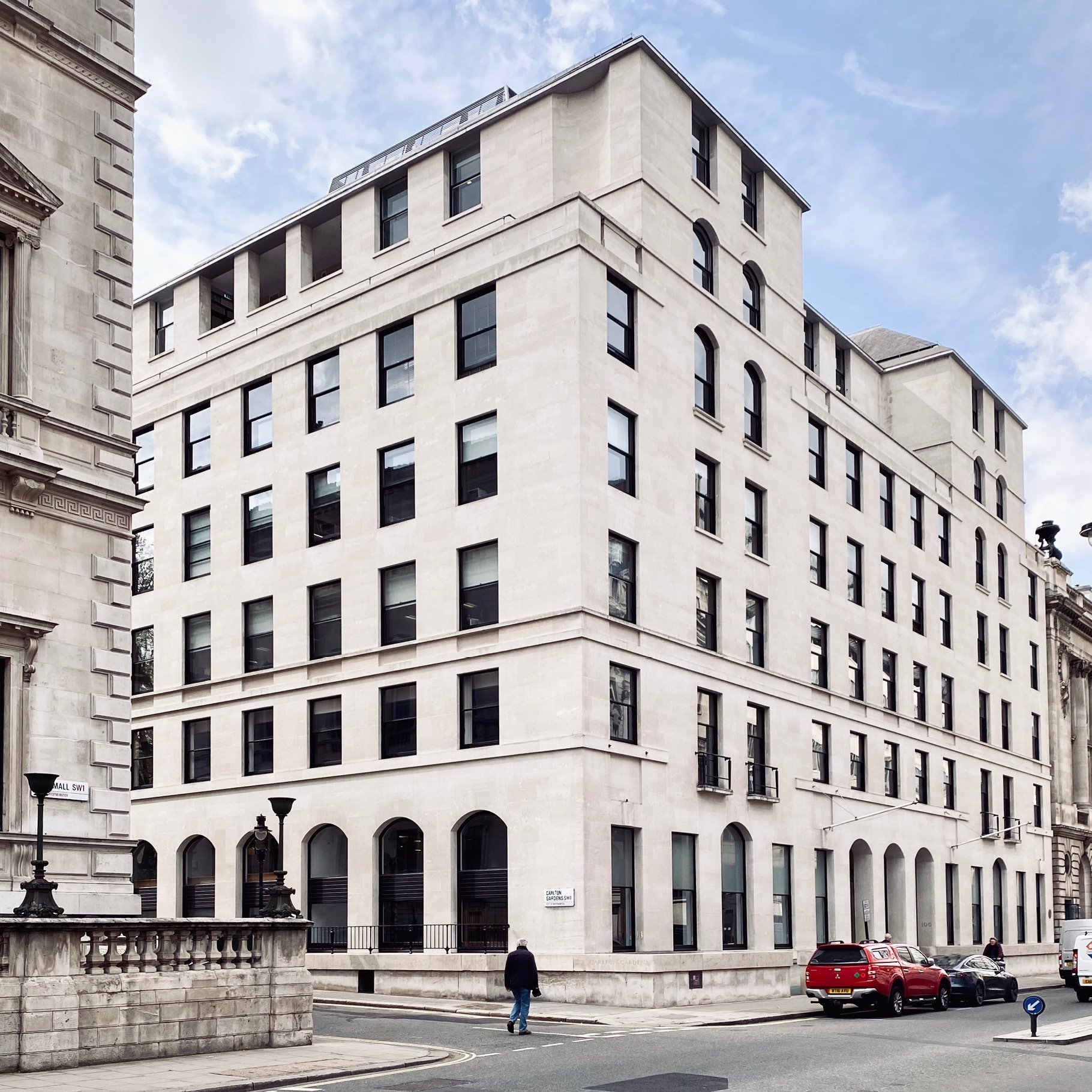
Street view of 100 Pall Mall showing Stripped Classicism Style.
Westminster City Council has granted Listed Building Consent for upgrades to the common parts of 100 Pall Mall, a Grade II listed office building within the St James's Conservation Area. The consent permits a sympathetic refresh and a set of new interventions that echo the form and materiality of the original mid-twentieth century interior. Once complete, the works will reposition the building for its twenty-first century office occupiers without compromising what makes the asset distinctive in the first place.
The consent was secured through a sensitive design approach and through engagement with the Conservation Officer at Westminster City Council. Heritage stewardship and openness to collaboration sit at the centre of how 4SA delivers consent on listed assets in central London.
The building
100 Pall Mall was designed in the 1950s to designs of Duke and Simpson with Donald McMorran as the
consulting architect for the exterior. Its Portland stone clad exterior features segmental arches in the stripped classicism style, simple and sophisticated in its proportioning. McMorran and his partner George Whitby were among the most accomplished architects working in the City of London in the post-war decades, later designing the listed Wood Street Police Station and the prominent extension to the Central Criminal Court at the Old Bailey. The interior at 100 Pall Mall is unusually intact for an office building of its period: a double-height barrel-vaulted reception ceiling, extensive stone and terrazzo wall panelling, and a combination of polished brass and antique bronze metalwork.
The process
The process began with identifying which features in the building were original and worth retaining and restoring, and which were later additions that no longer enhanced the existing character. Through historic research and on-site survey, we built a detailed picture of the building's DNA: its form, its proportions, and the substantial palette of historic materials it deploys.
From that analysis, we selected a deliberately pared-back palette of materials and geometries for the new interventions. The intent throughout was that any new fabric would echo and harmonise with the existing rather than compete with it.
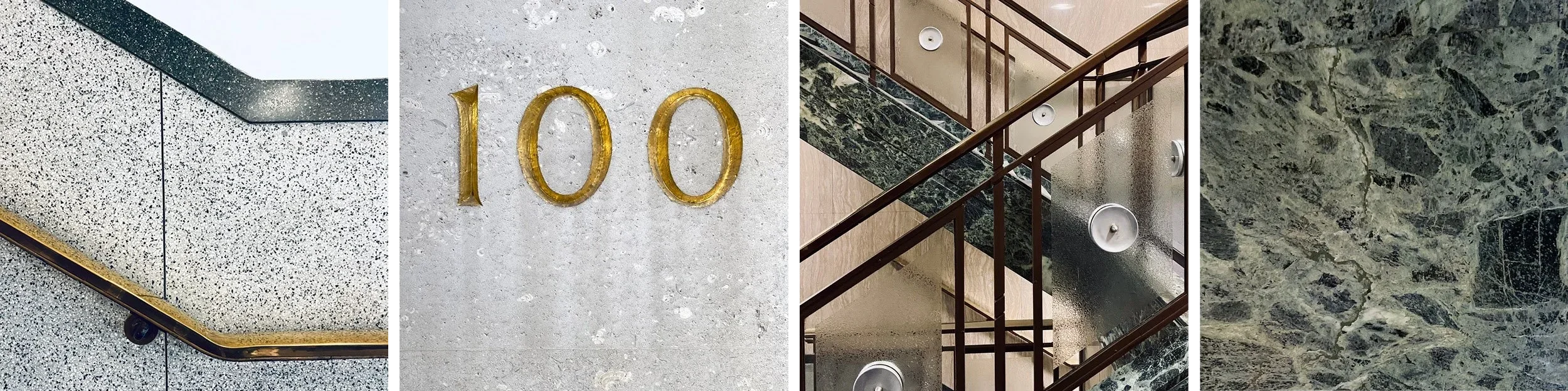
Existing heritage features in the building including terrazzo, green marble and brass elements from which inspiration for new elements was drawn.
The design
Research revealed that the two side transepts flanking the reception were a later enlargement and held little historic value. That finding allowed us to treat those areas as a blank canvas for a more contemporary intervention, while leaving the principal volumes of the original reception untouched.
We adopted the arched form of the existing barrel-vaulted ceiling for new brass-lined seating niches, and drew the green tone of the existing marble detailing into new wall panelling. An eye-catching moon-like pendant will hang in the central reception space, a quiet nod to Boullée's Cenotaph for Isaac Newton, a famous unbuilt neoclassical scheme whose monumental sphere resonates with McMorran's own architectural language. We are working with lighting designer Dome Design on the lighting strategy. Decorative low-energy fittings throughout will feature bright brass trims, picking up on the gold-leaf building signage and the polished brass handrails to create a hospitality-led feel in the reception.
We are now finalising the internal details for construction and discharging the Listed Building Consent conditions with the Conservation Officer. Further updates will follow as the project moves on site.
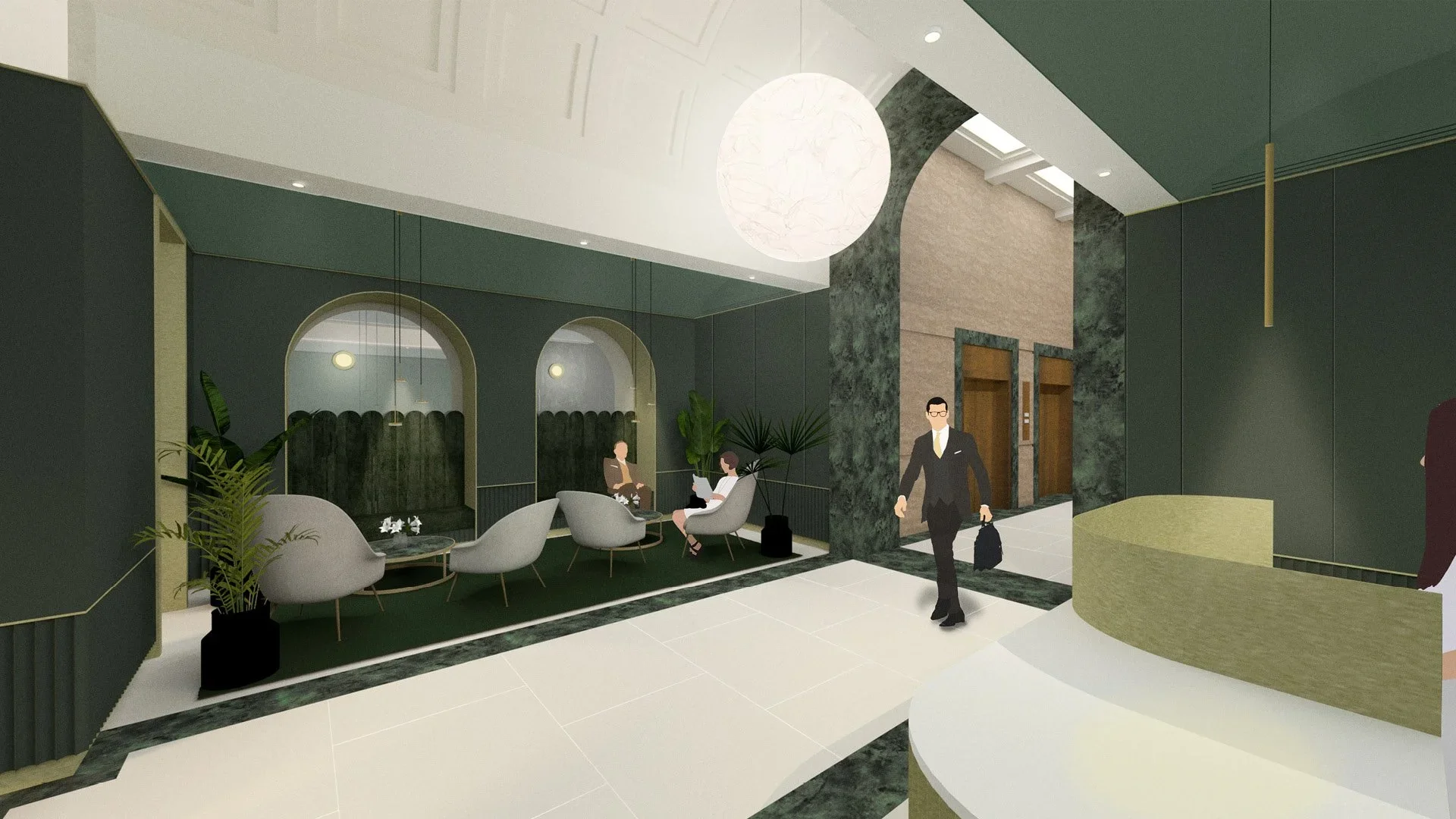
Early visualisation of reception area.
For more information, please visit our project page.