
From Mayfair Townhouse to Dress Shop to Tired Offices to Repositioned Workspace: Refurbishing a Locally Listed Building on Grosvenor Street
A five-storey neo-Georgian red brick building in the heart of the Mayfair Conservation Area is being repositioned by 4SA as workspace fit for a contemporary occupier. Locally listed and rich in historic fabric, the building has lived several lives. It began as a grand private residence, then became a women's dress shop and furrier, with a shop floor and changing rooms at street level and a staff canteen and tailor's workshops on the upper floors. From the 1950s onwards it served as offices, but the existing fit-out had not been refurbished in years and was tired and energy inefficient. Its next chapter is a heritage-led refurbishment that honours the building’s past whilst designing for the future.
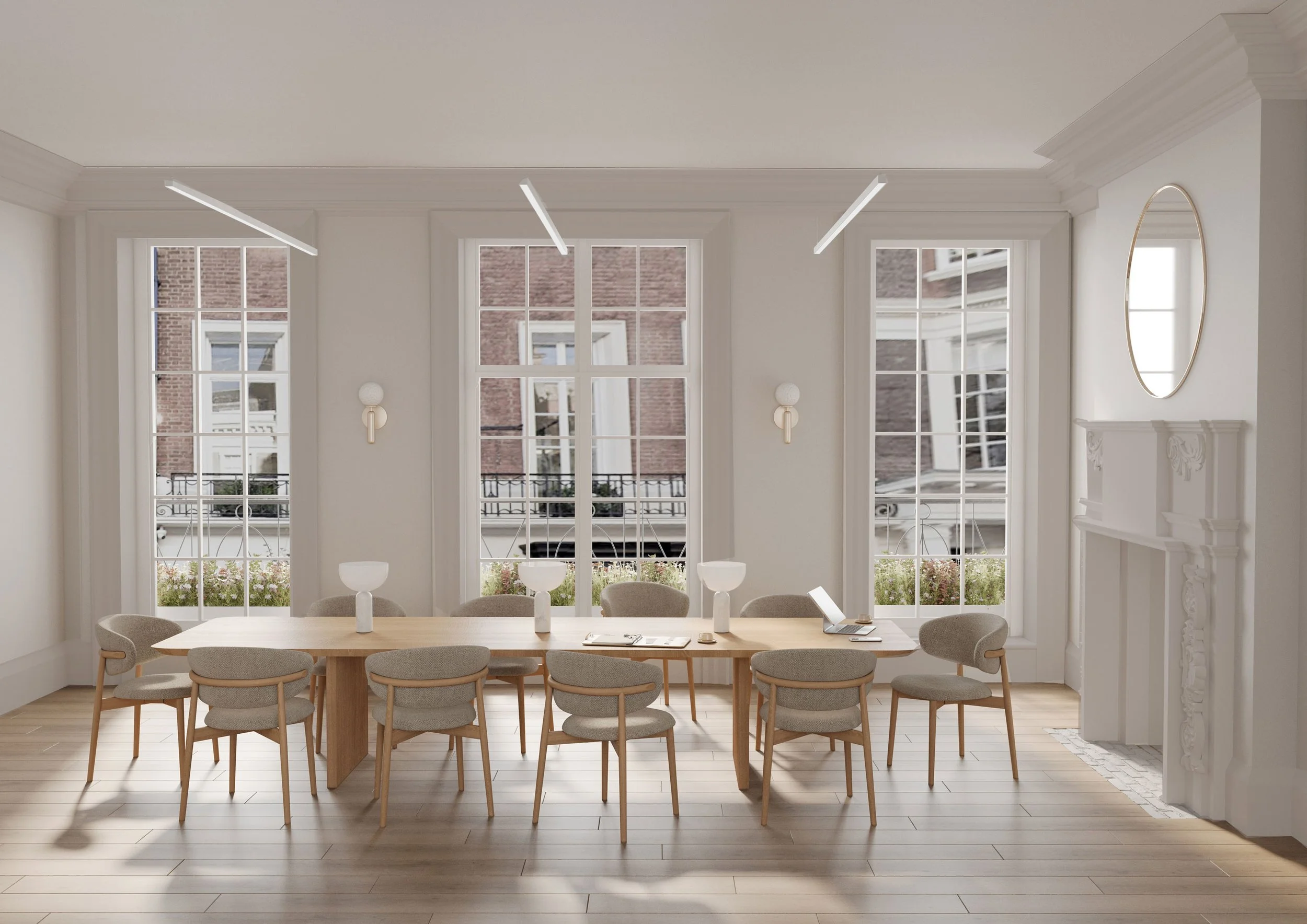
Visualisation of one of the new office spaces for the Grosvenor Street redesign. Image credit: 4SA
A heritage-led approach to workplace refurbishment in Mayfair
The brief is a complete refurbishment that retains and restores the building's original character whilst bringing the building up to the standard a 21st century occupier expects. Many of the building's defining historic features are being preserved in place, including original fireplaces and decorative staircase railings. New interventions draw their design cues including colour, pattern and materiality from the building's original DNA to ensure they sit comfortably and harmoniously beside existing historic elements.
This is the working principle behind every 4SA commercial heritage project: working with the conservation fabric is treated not as a constraint but one from which to draw inspiration. On a building of this calibre in Mayfair, the historic character is part of the asset value, not separate from it.
New services, end-of-trip facilities and fire upgrades within retained historic fabric
This is not a project that stops at retain and restore. The refurbishment delivers new WCs and teapoints across the upper floors, end-of-trip facilities including a secure bike store and showers, and an upgrade to fire compartmentation between floors carried out within the constraints of retained historic fabric. End-of-trip provision in particular has moved from an amenity to an expectation in the central London workplace market, and a heritage building cannot compete for occupiers without it.
Resolving these interventions in a locally listed building means designing them around the retained features rather than imposing them over the top. Each new service, each new piece of joinery, each new compartment line has been worked through with the historic fabric in mind from the outset.
A lighting strategy designed around the historic fabric, not over it
The lighting strategy across the building illustrates the wider design approach of ensuring interventions sit quietly beside historic features. Extremely slim-line ceiling-mounted fittings, specified to LG7 compliance for office task lighting, have been used throughout to provide the illumination levels required for contemporary working whilst leaving the original decorative cornices, ceiling roses and historic plasterwork fully visible. There are no suspended ceilings concealing the heritage features, or suspended cables. Elegant brass wall lights add a quiet layer of refinement to the principal rooms and hallways.
The argument is straightforward. The historic features are already in place, already part of the asset, and a fit-out that conceals or obstructs them throws away value the building already holds.
Visit our project page for more information.
Frequently Asked Questions
Is the building on Grosvenor Street listed? The building is locally listed and sits within the Mayfair Conservation Area. Locally listed status means the building is identified by the local authority as making a positive contribution to the area's character, and changes to it are assessed accordingly through the planning process.
What RIBA stages is 4SA delivering on this project? 4SA is delivering the project from RIBA Stage 1 through to Stage 6, covering strategic definition, design development, technical design and the construction stage through to handover.
Why retain the cornicing and fireplaces rather than strip the building back? The historic fabric is part of what gives a Mayfair townhouse of this period its commercial and architectural value. Retaining and restoring original features such as cornicing, fireplaces and staircase railings preserves the qualities that distinguish the building from generic office stock and supports its long-term position as a heritage asset.
Can a building like this meet the requirements of a contemporary office occupier? Yes, provided the technical design is resolved with the heritage fabric in mind from the outset. The Grosvenor Street project introduces new WCs and teapoints, end-of-trip facilities including secure bike storage and showers, fire compartmentation upgrades within retained historic fabric, and LG7-compliant lighting throughout, all delivered without concealing the building's original character.
Did 4SA prepare the Heritage Statement for the planning application? Yes. The Heritage Statement was prepared in-house by 4SA as part of the planning submission. Authoring it in-house meant the conservation argument and the design came from the same team, rather than from a heritage consultant working separately to the architect.
Is 4SA involved in discharging the planning conditions? Yes. 4SA is preparing the supporting documentation required to discharge the conditions attached to the consent, working alongside the client team on submission. On a heritage refurbishment in a Conservation Area, the conditions typically cover materials, detailing and the treatment of retained fabric, all of which sit naturally within 4SA's scope.
What other workplace projects has 4SA delivered? You can read more in the workplace section of our website.