
4 Top Tips: How to Budget for a Heritage Home Extension in a London Conservation Area
A heritage architect's guide to the total cost of extending a London home, and the four decisions that keep a project on budget from brief through to completion.
A complete home refurbishment and extension in London at the calibre most of our clients are aiming for sits between £400,000 and £800,000 in construction cost alone. However, by the time consultant fees, VAT, and contingency are added, the total project envelope is typically 1.5 to 1.6 times the construction figure. The single most common reason a residential extension runs over is not a contractor's overrun, but a homeowner who didn’t understand all the costs involved.
The four tips below help keep a heritage extension on budget. They apply equally to a Victorian terrace in a Conservation Area, a Grade II listed townhouse, or a larger detached period home.
1) Resolve the brief before the design develops
Take the time from the outset to clearly define what you need from your home extension, thinking about what currently does and does not work, both spatially and functionally. Consider how you will use the new space throughout the day, and throughout the seasons, and ask yourself what matters most to you about how you want to live in the house.
At 4SA we guide this process with a supportive hand. We are experts at spatial analysis and at distilling a wide range of aspirations into a concise architectural brief. The footprint for an extension based on the maximum envelope the site can take is a sensible starting point, but is not always the right answer. The brief is what tells us whether that envelope is the right size and shape for the way you want to live, or whether a different configuration would serve the household better while allowing more of the budget to go into the quality of finishes, joinery, and materials.
Decisions made at brief stage are the most valuable decisions on any project. The same decisions made once construction has started cost considerably more.
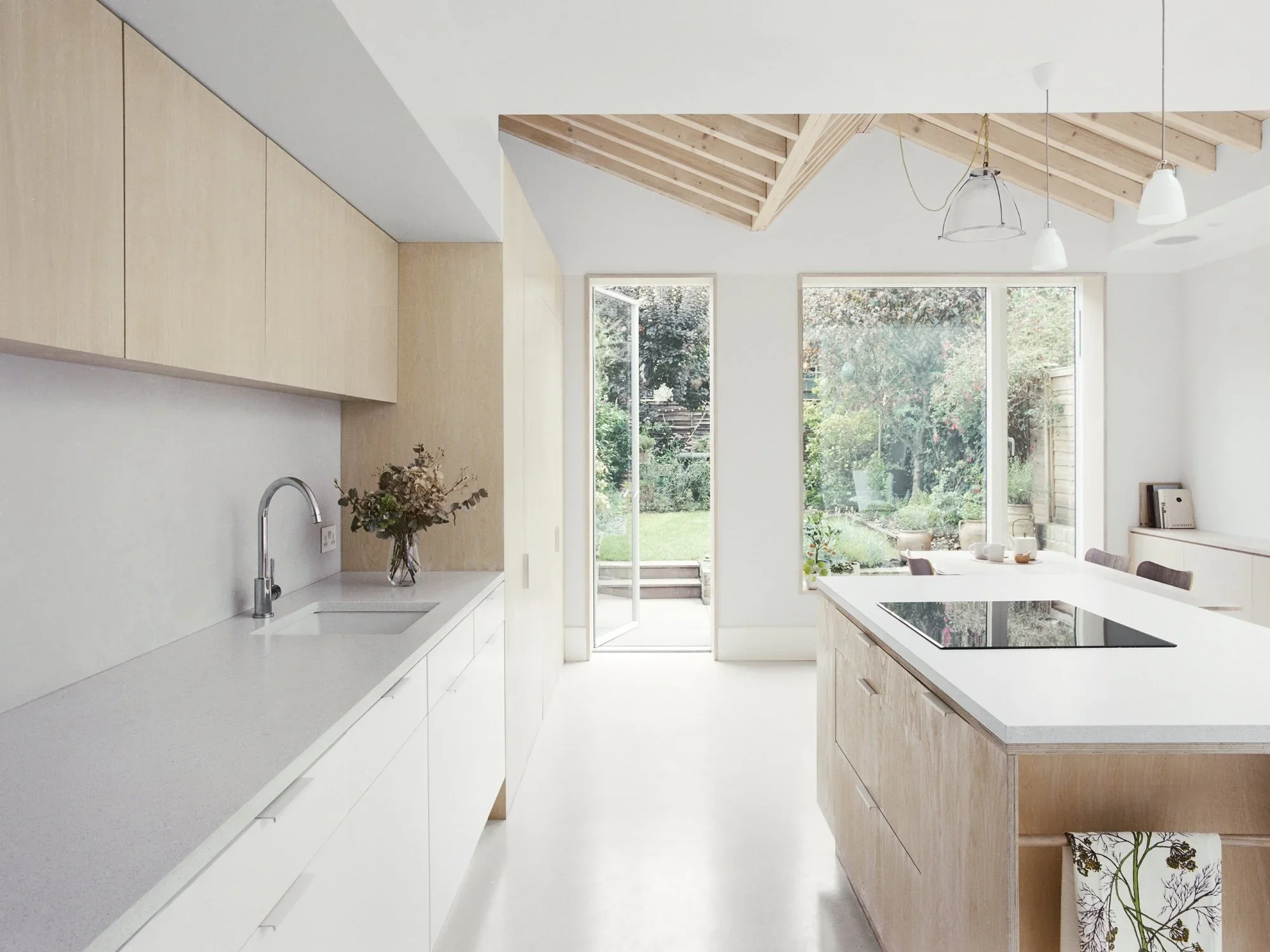
Our Zig Zag House in South London features space, light along with high quality flooring, joinery and worktop finishes to meet the needs of the family.
2) Set aside a 15 per cent contingency, and ringfence it
At 4SA we work hard to reduce the risk of unexpected issues on site. A measured laser survey of the existing building at the outset, trial pits to confirm the depth and condition of the foundations, opening up of suspect areas where access allows, and early engagement with the structural engineer all help us forecast what the project is likely to encounter. The more we know before construction begins, the fewer surprises emerge once it does.
Even so, historic buildings hold many unexpected stories behind their walls. Foundations may turn out to be shallower in areas not covered by the survey. Timber joists hidden behind plaster ceilings may have rotted and need replacement or splicing, while a fine hairline crack on plaster may be indicative of a large crack beyond that need stitching. Construction projects are also subject to material and labour cost increases driven by supply chain and political conditions beyond a contractor's control.
For these reasons we recommend you set aside a 15 per cent contingency on top of your estimated construction cost. This buffer covers rectifying unforeseen site conditions, price increases on materials, and changes in project scope as the build progresses.
By planning for these costs from the outset, you avoid the financial surprises that derail heritage projects when they are not budgeted for.
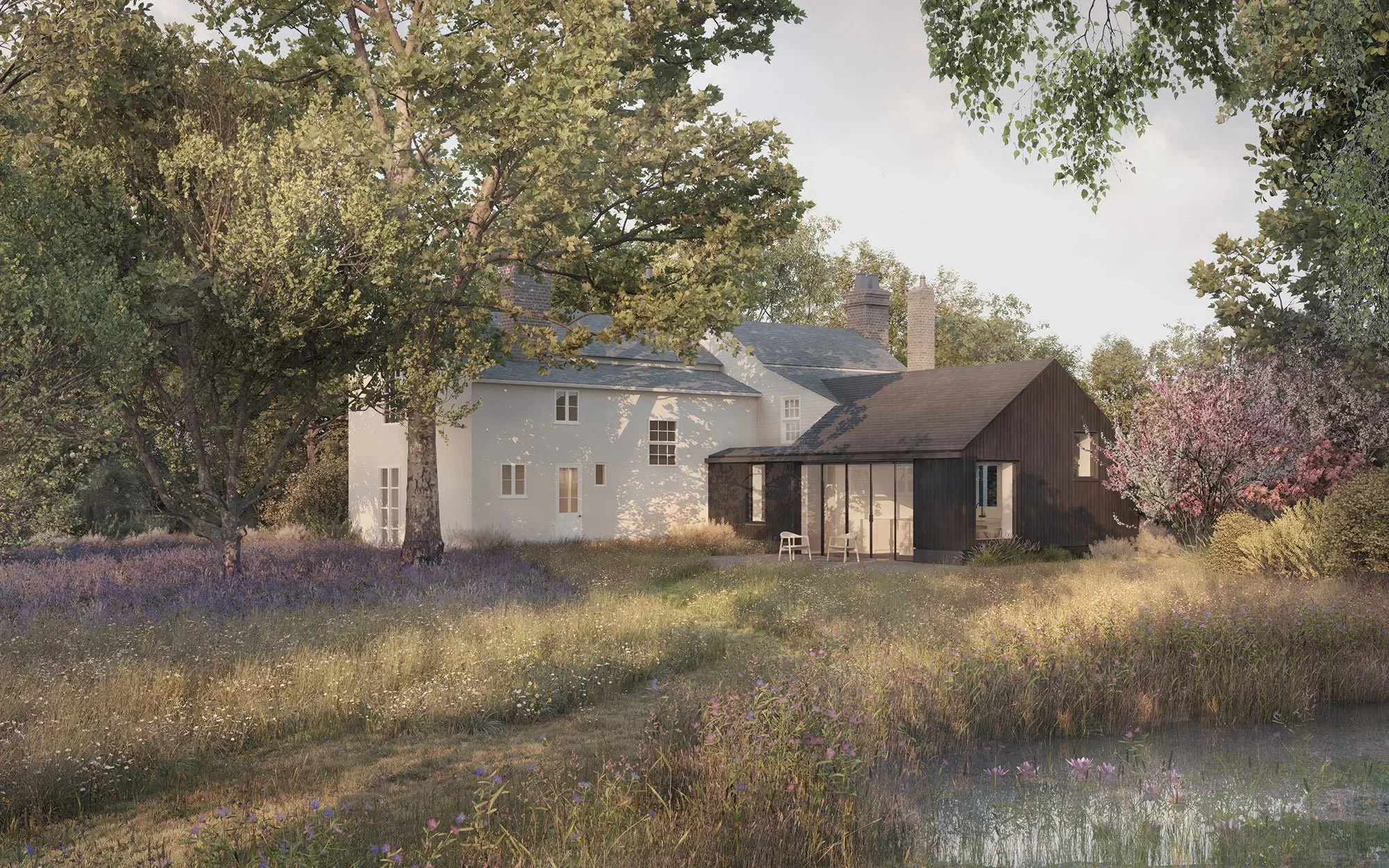
Extra contingency was set aside on our Secret Garden house to deal with potential issues related to unexpected underground drainage and ground conditions.
3) Add VAT and costs of the full consultant team to the budget at the start
Two costs sit outside the construction figure and are routinely missed in the early stages of a project.
VAT at 20 per cent. Construction costs and consultant fees are quoted exclusive of VAT. Listed building work used to attract reduced VAT under historic reliefs, but the residential conversion relief for listed dwellings was withdrawn in 2012. Standard rate applies on the vast majority of heritage residential work. Assume 20 per cent unless your accountant confirms a specific exemption.
Architectural fees and the wider consultant team. These are two different costs and should be budgeted separately.
Architectural fees on a full RIBA Stages 1 to 7 appointment in London typically sit between 10 and 15 per cent of construction cost, depending on the complexity of the heritage context and the level of bespoke detail involved. A heritage extension in a Conservation Area sits at the higher end of that range because the planning work is more demanding and the detailing is bespoke.
The wider consultant team adds a further 4 to 8 per cent. This typically includes a structural engineer, a party wall surveyor, a measured surveyor, an underground drainage surveyor and a heritage consultant. 4SA offers a one-stop-shop for heritage consulting and the preparation of heritage statements to accompany works to listed buildings or dwellings in Conservation Areas. The cost of this service varies based on the complexity of the works. We also recommend that a contract administrator and a quantity surveyor is worth appointing on projects above £400,000 in construction cost where options are being considered and cost certainty matters before detailed drawings are commissioned. Contract administrators and quantity surveyors are also required on larger scale projects above £500, 000 where costs need to be managed closely.
The combined figure, architectural fees plus the wider consultant team, plus VAT on both, is the number to budget alongside construction. We tell clients this at the first meeting to ensure expectations are managed and the design can be developed to suit their brief.
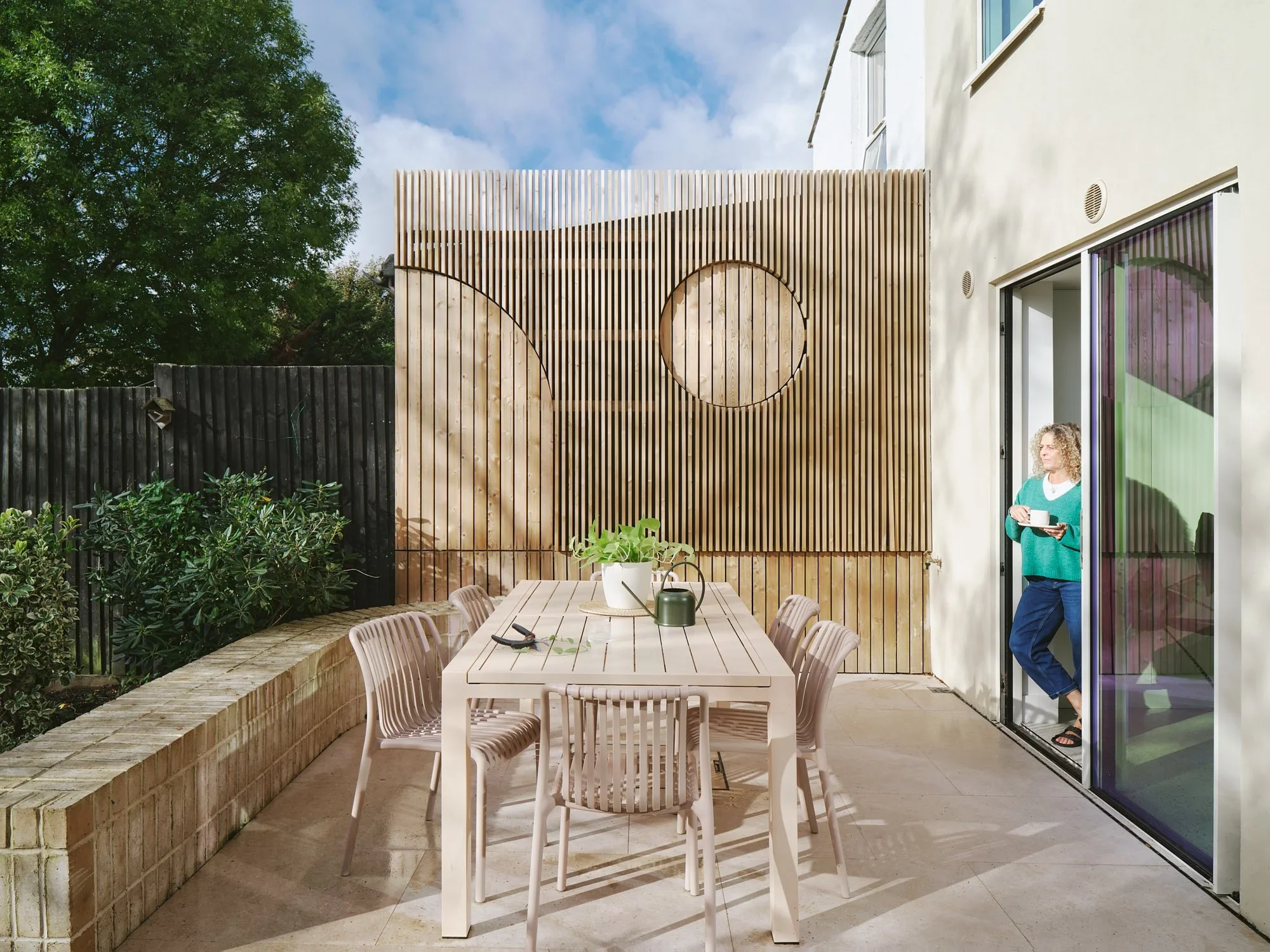
Our client initially thought they wanted more space, but ended up keeping the footprint small and using the budget on quality finishes.
4) Lock the design down before you start on site
The most expensive habit on a residential extension is the mid-construction change of mind. A change made at planning stage costs the price of a revised drawing. The same change made after the slab is poured costs the materials, the labour, and often a contractor's claim for an extension of time.
The best discipline is to make every significant decision, including kitchen layout, bathroom layout, joinery, lighting positions, and all fixtures finishes, before construction begins. A full RIBA Stage 4 technical design package, properly coordinated between the architect, the structural engineer, and the services consultants, is the document that contractors price against and which therefore helps keeps a project on budget. It is also the document that some clients try to economise on and pay for many times over during construction.
What this looks like in practice
For a heritage extension in a London Conservation Area at the calibre we work to, the cost breakdown typically lands in this shape:
Construction cost: the base figure quoted by the contractor (exclusive of VAT).
Contingency: 15 per cent of construction cost.
Architectural fees: 10 to 15 per cent of construction cost depending on scale and complexity.
Wider consultant team: 4 to 8 per cent of construction cost.
VAT: 20 per cent on the construction cost and on all professional fees.
The total project cost is therefore typically 1.5 to 1.6 times the headline construction figure. Homeowners who stay on budget are the ones who built that ratio into their thinking from the outset.
Talk to us before you commission anything
The most useful conversation we have at the start of a project is the one that pressure-tests the budget against the brief. If you are considering an extension in a Conservation Area or on a heritage property in London, an initial consultation with 4SA will tell you whether the project you have in mind is viable at the budget you have in mind, and what to change if it is not.
We work with homeowners looking to sensitively refurbish and extend their historic homes. Honouring the past, designing for the future is not a slogan for us; it is the discipline that keeps these projects deliverable.
To arrange an initial consultation, contact us here.
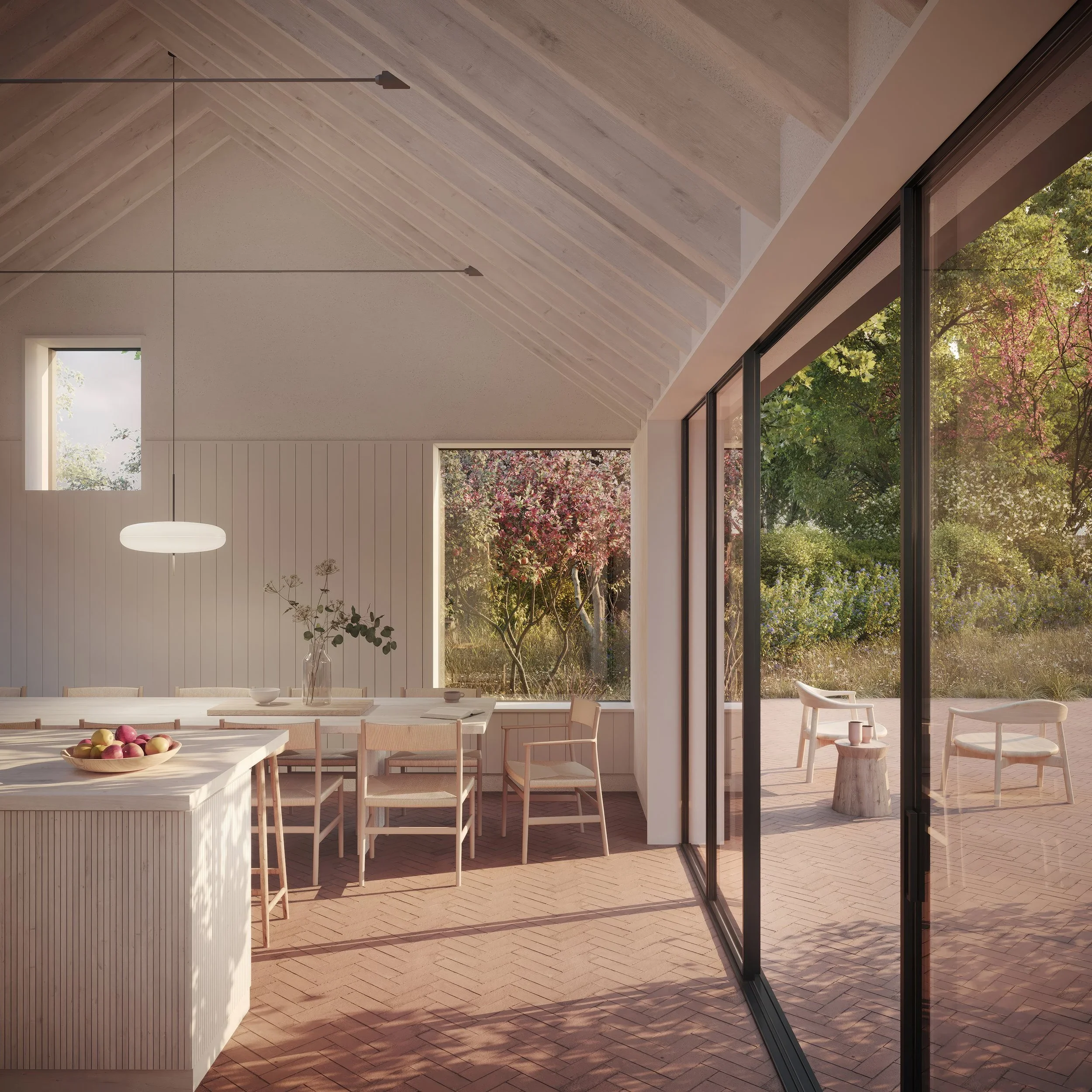
Consultants on our secret garden house in addition to us as the architect included a structural engineer, an ecologist, an underground drainage engineer, and a garden designer.