
Clerkenwell Design Week 2025: Our Top 4 Highlights
Clerkenwell Design Week is the event in the calendar for anyone serious about design, furniture, lighting and materials, for the built environment. This year's programme brought together more than 600 showroom events, 15 curated exhibitions, striking installations, and a full talks schedule across the neighbourhood. We spent a full day exploring the showrooms, and below are our top four highlights.
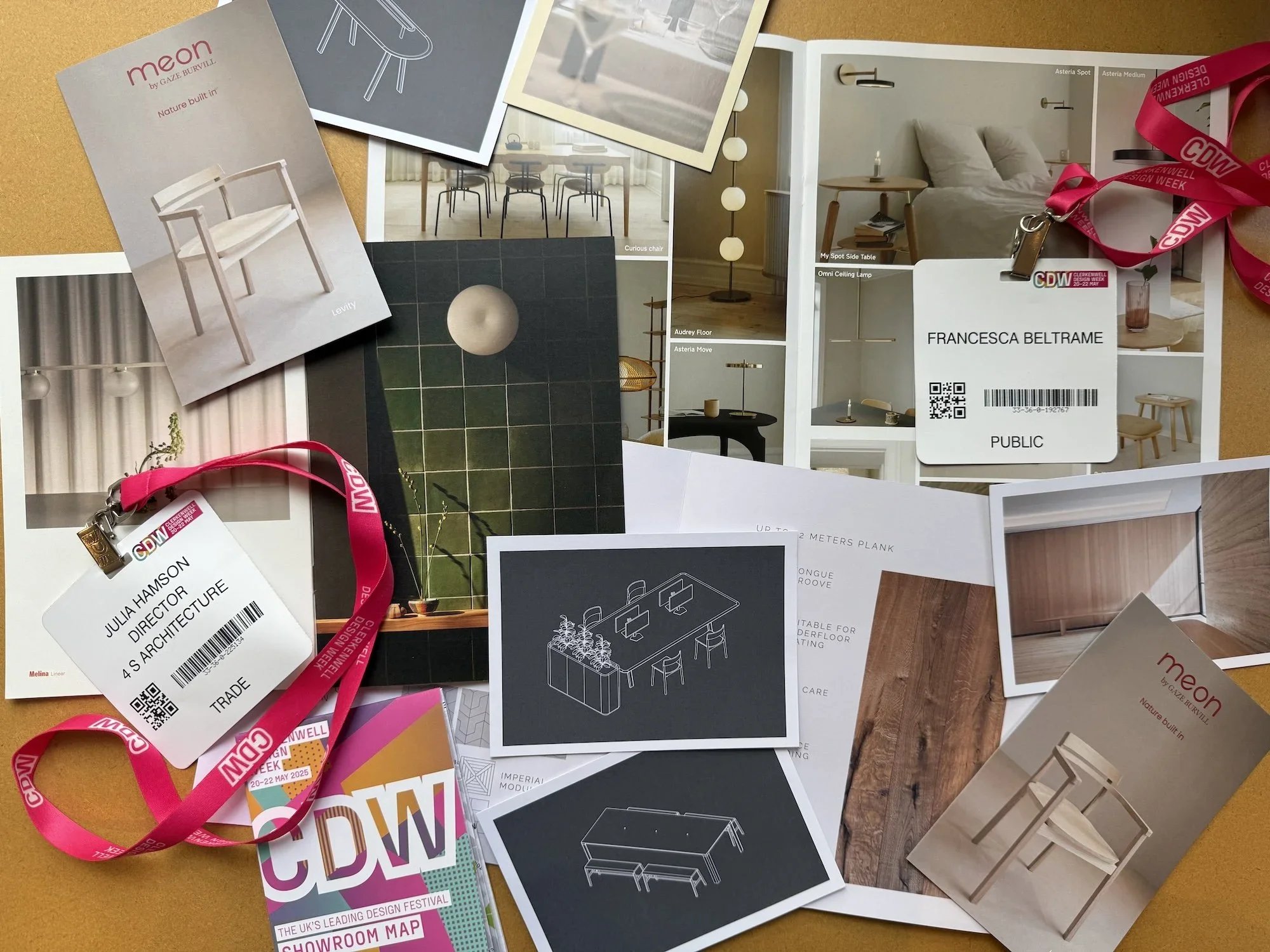
CDW 2025 was another brilliant year of design.
1) Benchmark Furniture - beautiful sustainable design
Founded in 1984, Benchmark has built its practice around a straightforward proposition: furniture should make a positive contribution to human health and the environment. Every piece is designed for longevity and adaptability, made without toxic chemicals or harmful VOCs, and manufactured to meet the standards for healthy buildings. Their lifetime Repair and Refurbish service, and Take Back scheme for pieces that have reached the end of their life with one owner, put circularity at the centre of the business rather than as an afterthought. For practices working on heritage interiors where the brief calls for something contemporary in feel but uncompromising in quality, Benchmark sits in exactly the right territory. This year their AYA High Table table with its integrated power sockets and charging ports caught our eye.
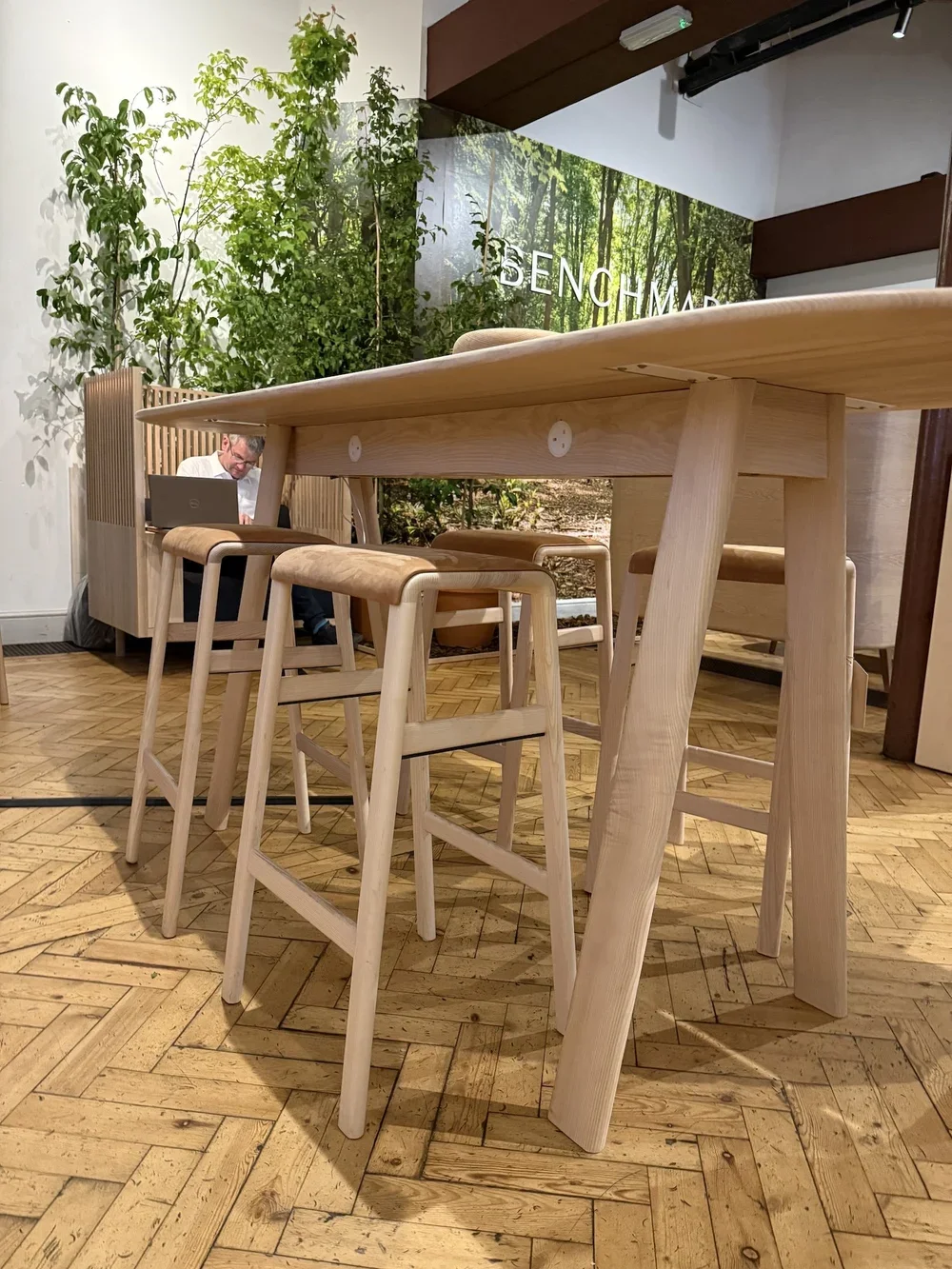
Table from Benchmark.
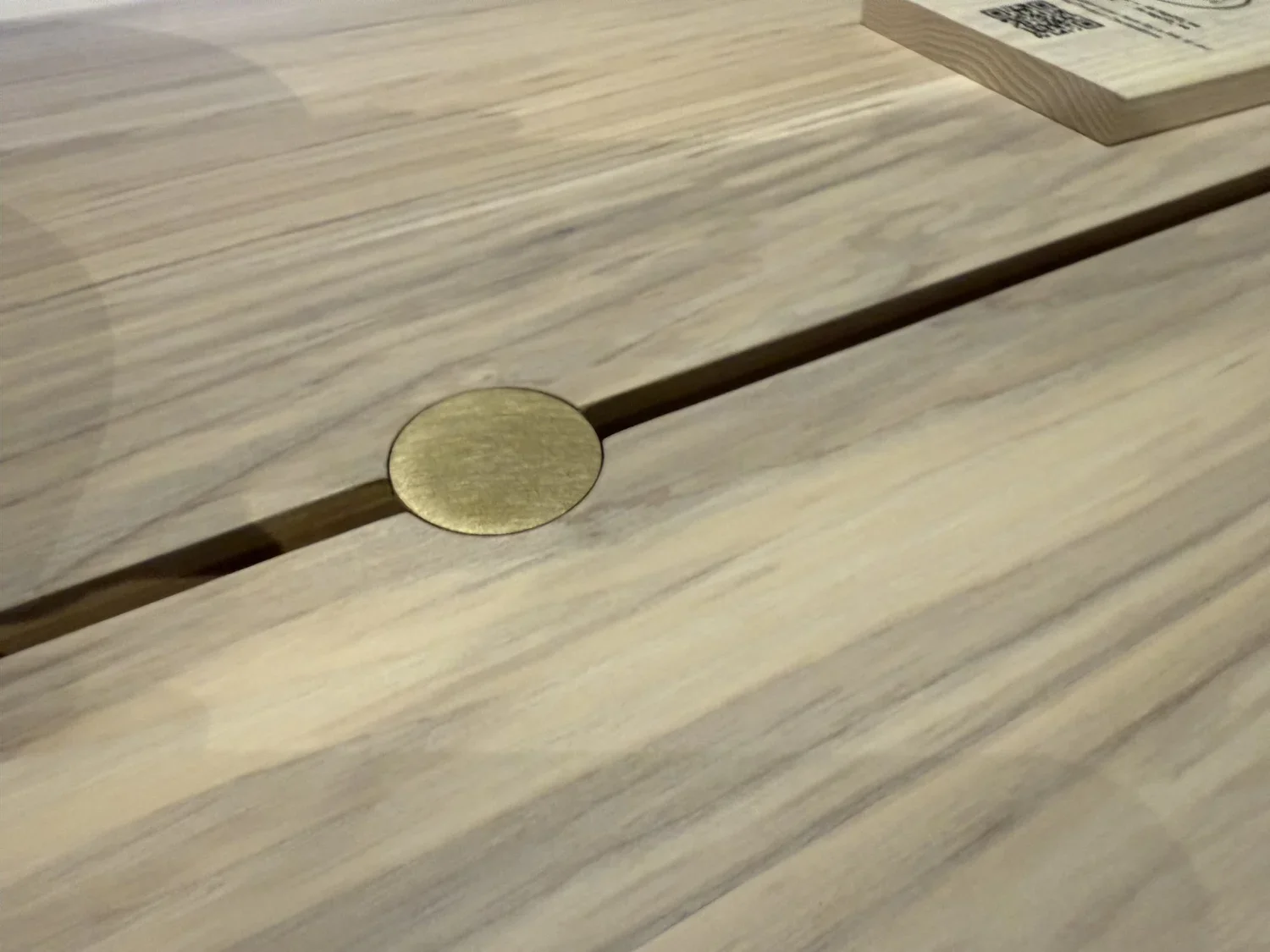
Elegant brass grommit for cables.
2) Hand & Eye studio - the Melina wall light
The Melina light from Hand and Eye Studio caught our eye immediately. The dimpled shade has the quality of something gently pressed by hand, giving the classic globe form an unexpected softness. Available in clear or opal matt, paired with a solid raw brass wall fitting, it is IP44 rated and therefore suitable for bathrooms. It is the kind of fitting that works equally well in a carefully restored Victorian interior or a clean contemporary extension, which is precisely the balance we are always looking for.
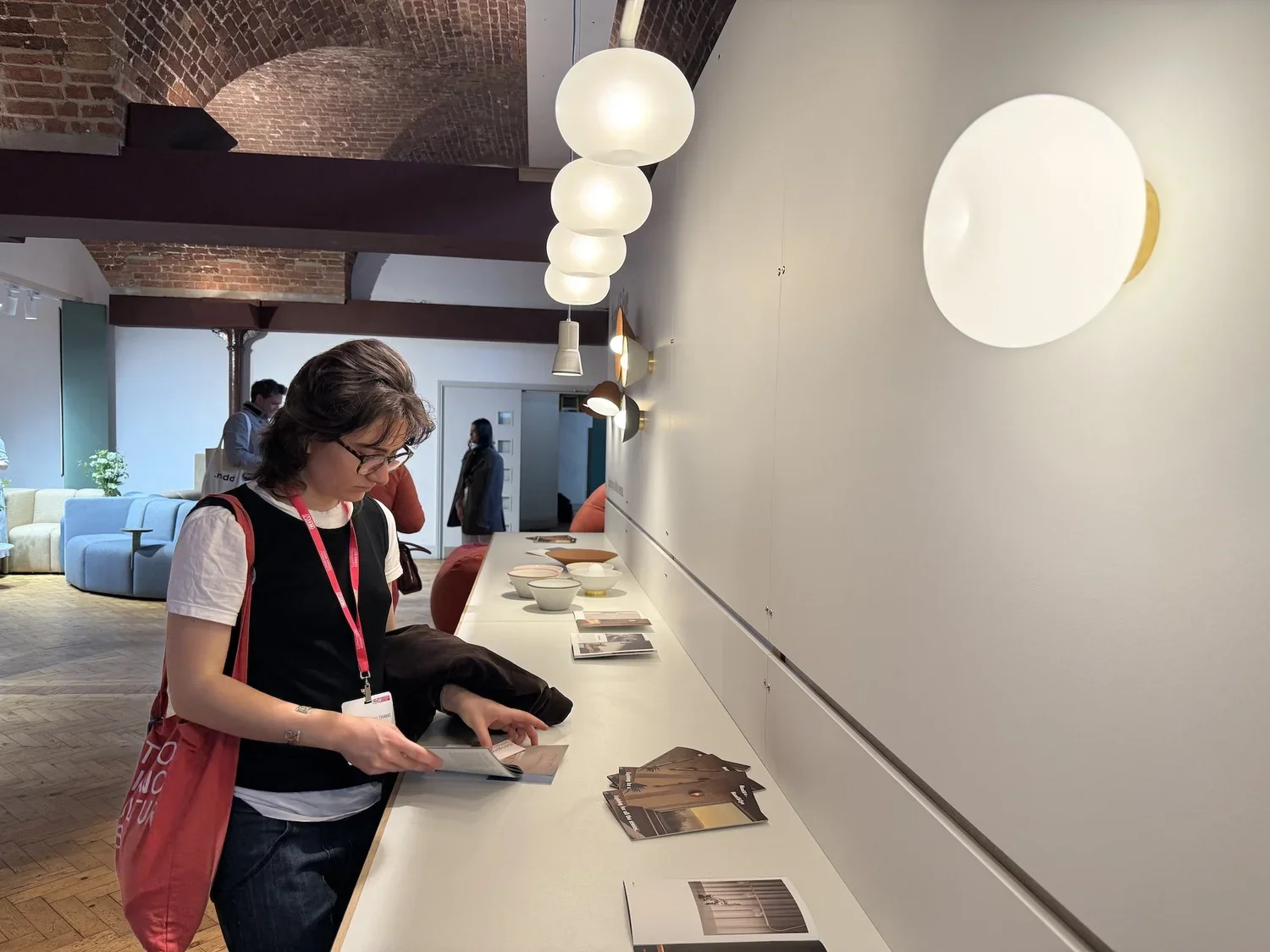
Francesca reviews the Hand & Eye studio new products.
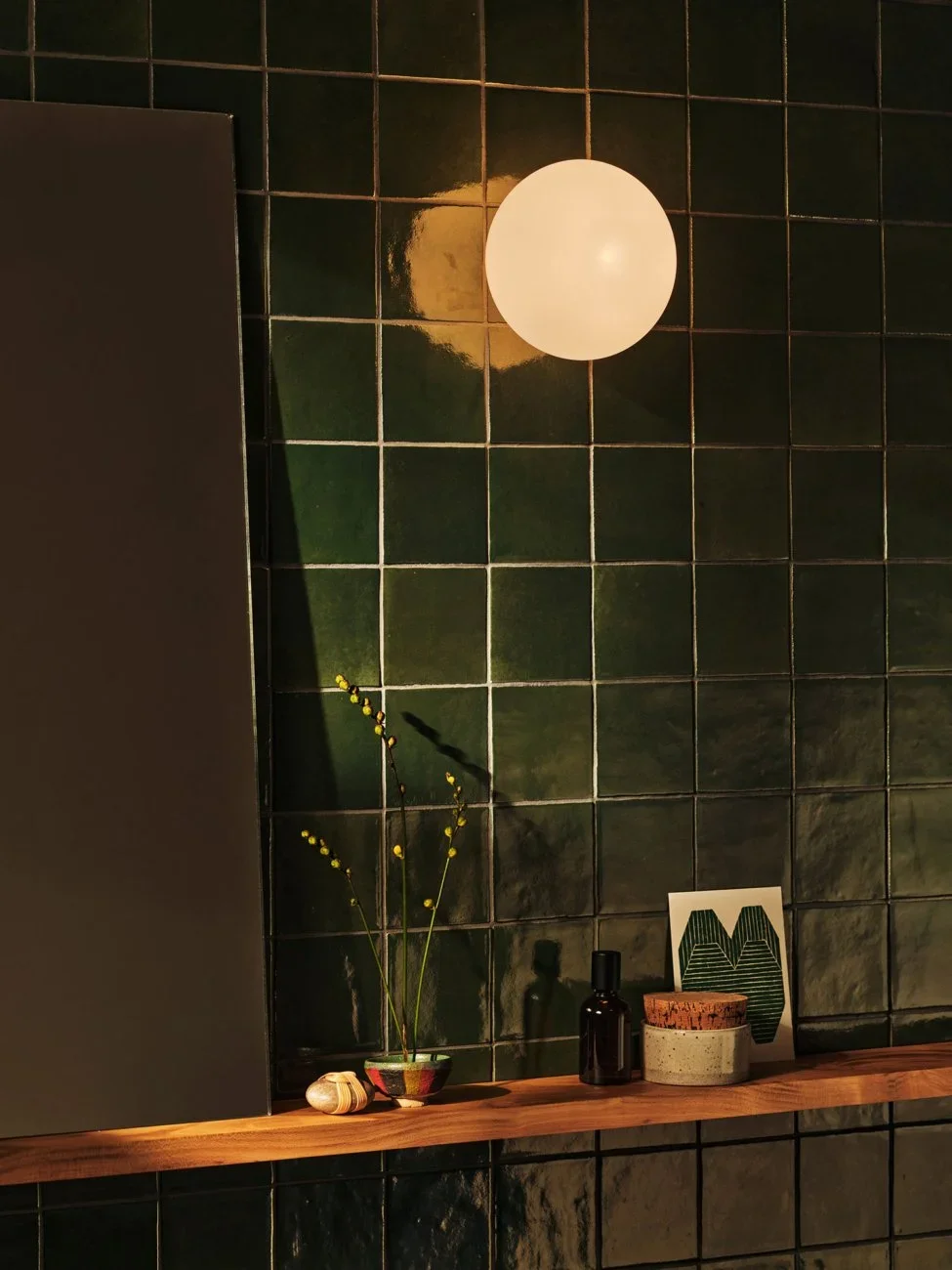
Dimple Shade from Hand & Eye studio (Image credit: Hand & Eye).
3) Solus Spolia recycled terrazzo
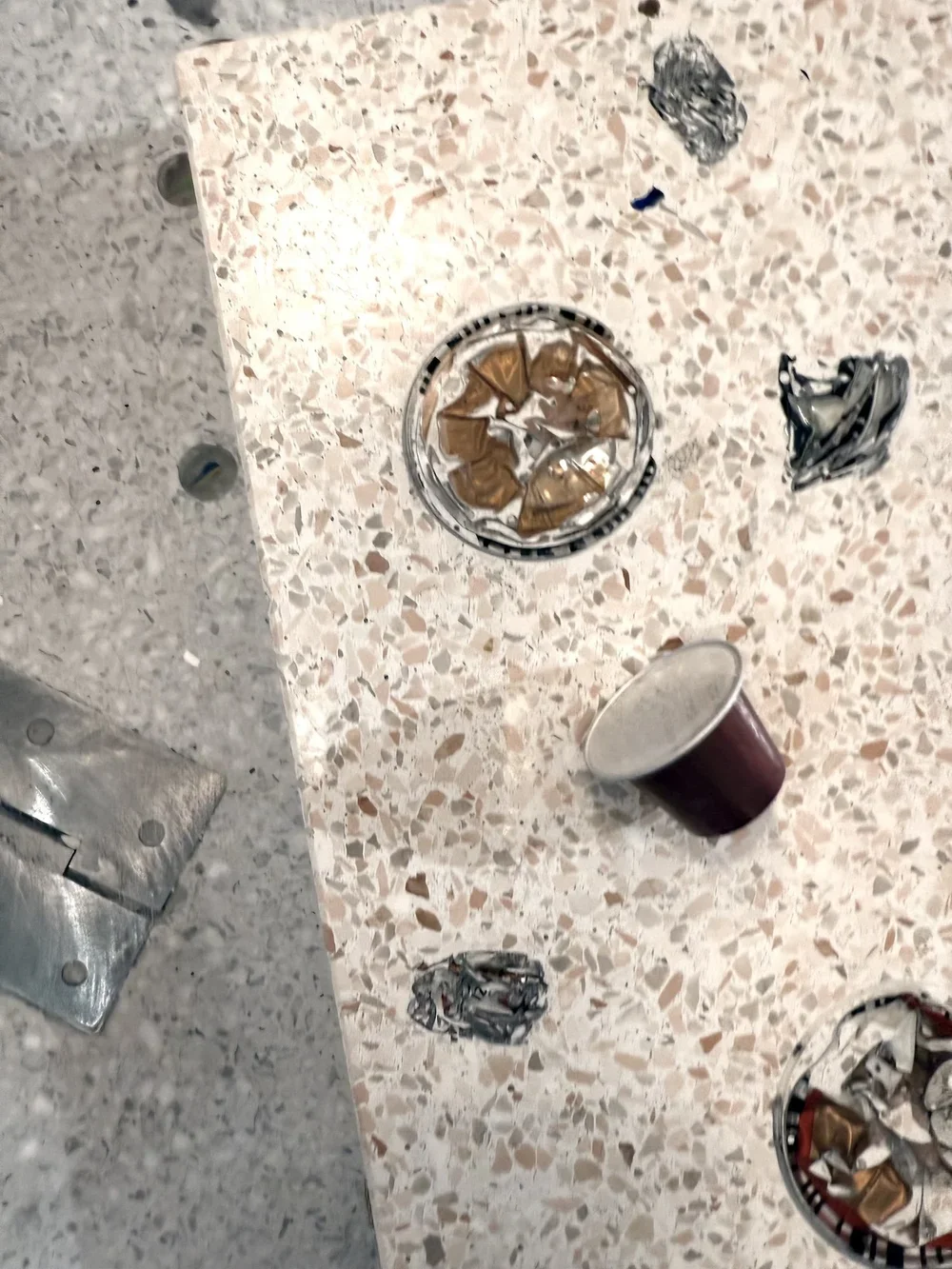
Spolia is one of the more genuinely interesting material stories we encountered this year. Made in the UK, this terrazzo range is produced by reconstituting materials sourced from a client's own site or salvaged products, available across 21 standard variations as well as bespoke commissions. The result is a tile that carries its own material history into a new context, creating what Solus describe as a narrative of continuity within a space. We enjoyed the concept that a surface made from a building’s own salvaged fabric could be re-purposed to become a new chapter in its history.
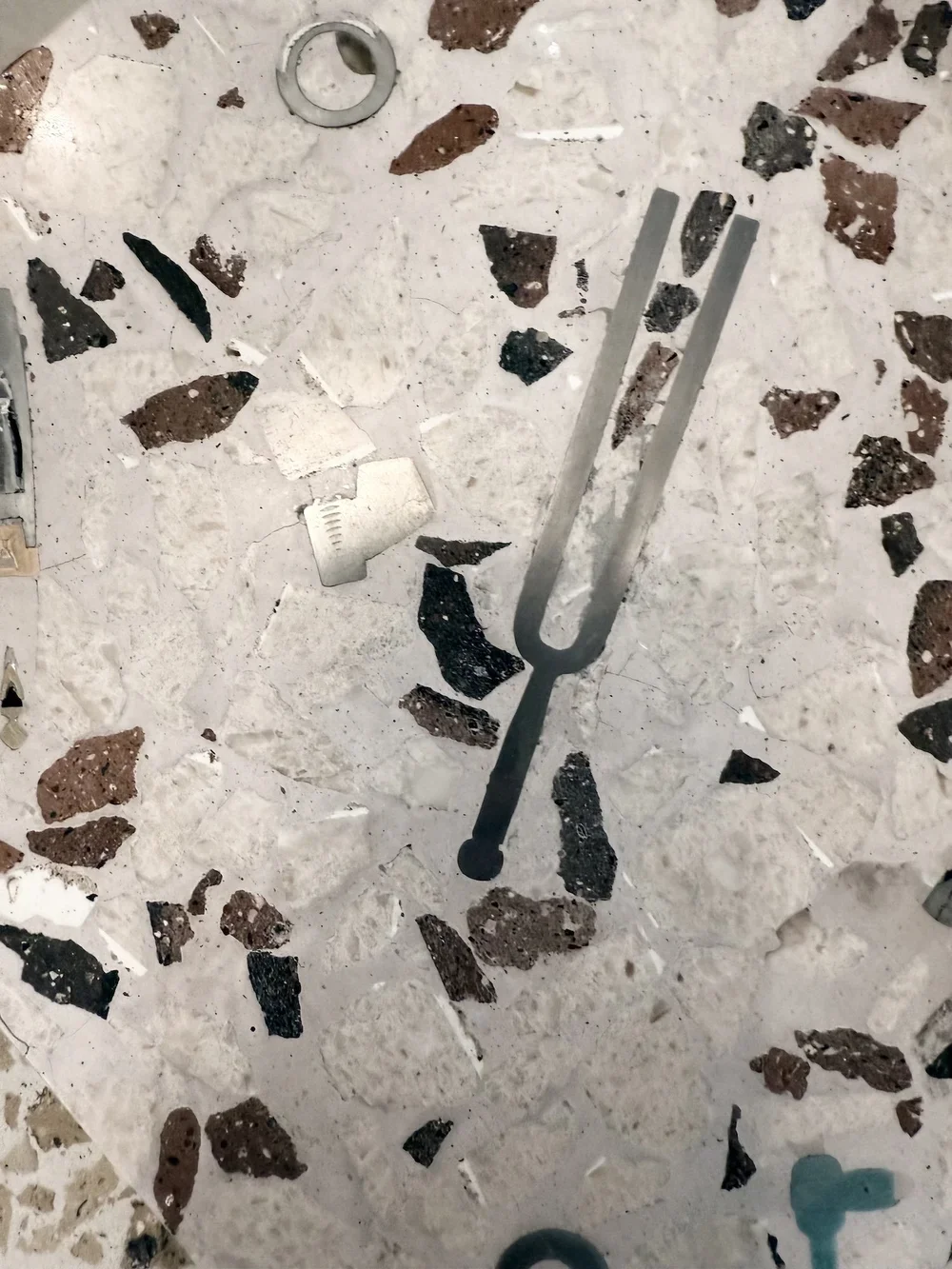
Details of bespoke recycled terrazzo from Solus Ceramics.
4) Case Furniture: found in Amin Taha's Clerkenwell Close courtyard
Part of what makes CDW worth the day is the installations you find between the main showrooms. Case, a British furniture manufacturer founded in 2004, had pieces placed in the courtyard garden of 15 Clerkenwell Close, designed by Amin Taha's practice Groupwork. The building is one of the more debated contemporary additions to the Clerkenwell Conservation Area, and the secret courtyard garden behind it provided an unexpectedly calm setting for Case's furniture.
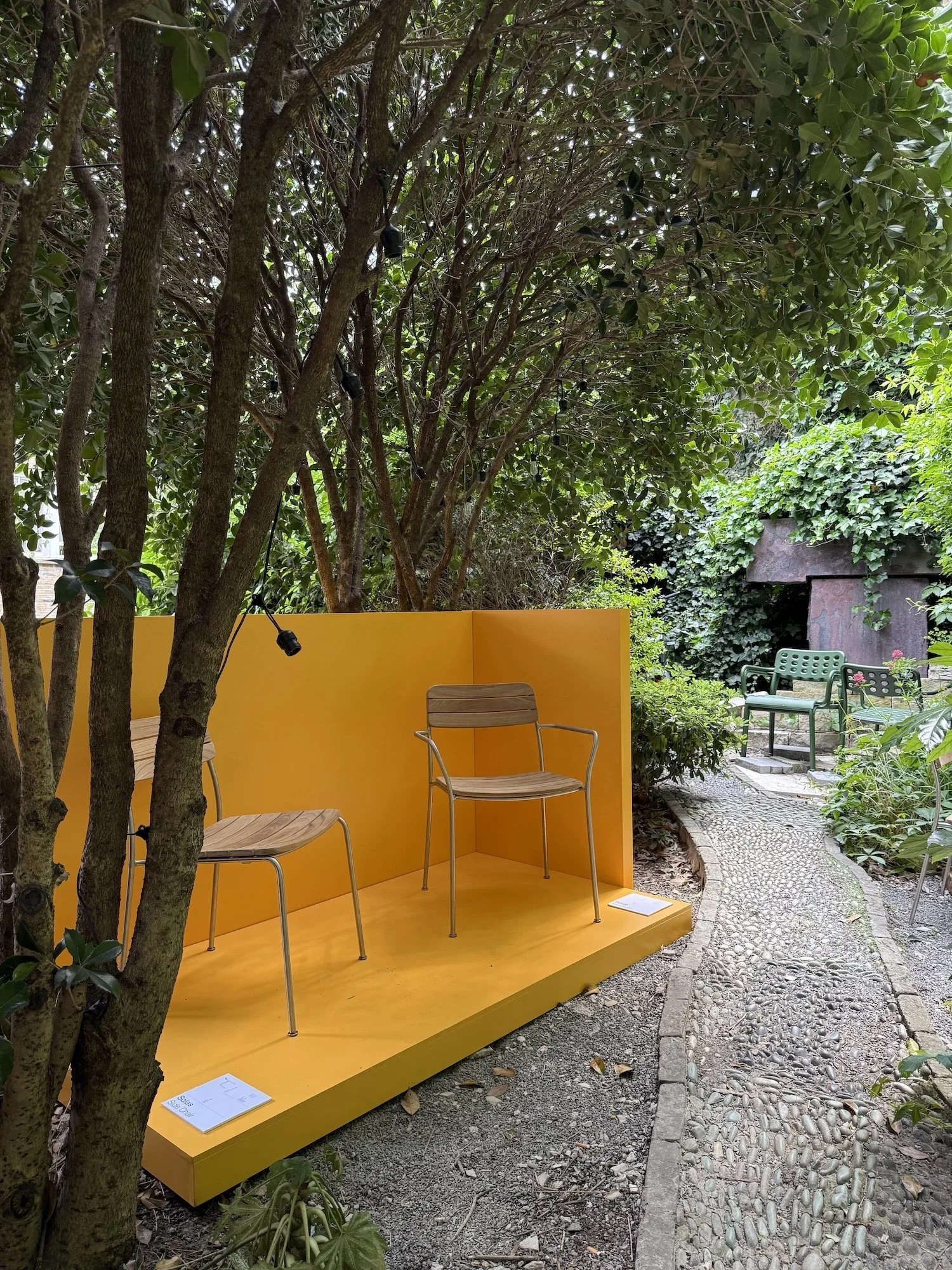
Garden at the Case Furniture installation in the garden of 15 Clerkenwell Cloes designed by Amin Taha.
Why these four?
The thread running through each of these is the same set of values we bring to our own work: material quality, longevity, honesty about how things are made, and an understanding that good design does not need to shout. Circularity in construction waste, fittings that work across periods and contexts, furniture built for repair rather than replacement: these are not trends. They are the direction the industry needs to move, and it was good to see them represented at CDW this year.
The images featured here were taken by 4SA, in our constant search for inspiration.