
Every instrument Tarisio sells comes with the story of who made it, who played it and where it has lived over its lifetime. So, when Tarisio approached us about their London headquarters, we recognised the same instinct that shapes our work with historic buildings and were keen to collaborate.
Tarisio is an international auction house and private sales venue for fine stringed instruments and bows, with offices in New York, London and Berlin. Its Cozio Archive records more than 36,000 instruments and bows, over 3,500 makers and over 11,000 historical owners, allowing a particular violin to be traced through the hands that played it.
The histories behind individual instruments they sell stretch from the workshops of Cremona and Milan to the concert halls of Berlin. Tarisio’s recent features included a Stradivari of 1710 that passed through the hands of world class violin soloists Dancla, Milstein, Krasner and Eto, and a Guarneri del Gesù, the ‘de Beriot’, now played by the First Concertmaster of the Berliner Philharmoniker. Its exhibitions have covered the violins of the London Symphony Orchestra, historic instruments played at Wigmore Hall and the Panormo family of makers.
A pedigree to match
Tarisio chose one of the commercial units at Ulster Terrace for its London headquarters, where we were already delivering the Cat A refurbishment. John Nash designed the Grade I listed terrace. He also laid out Regent’s Park and Regent Street and remodelled the Royal Pavilion in Brighton for the Prince Regent. His pedigree is a fitting match for a business that values each violin for its lineage, from the maker’s workshop to the famous players who owned it.
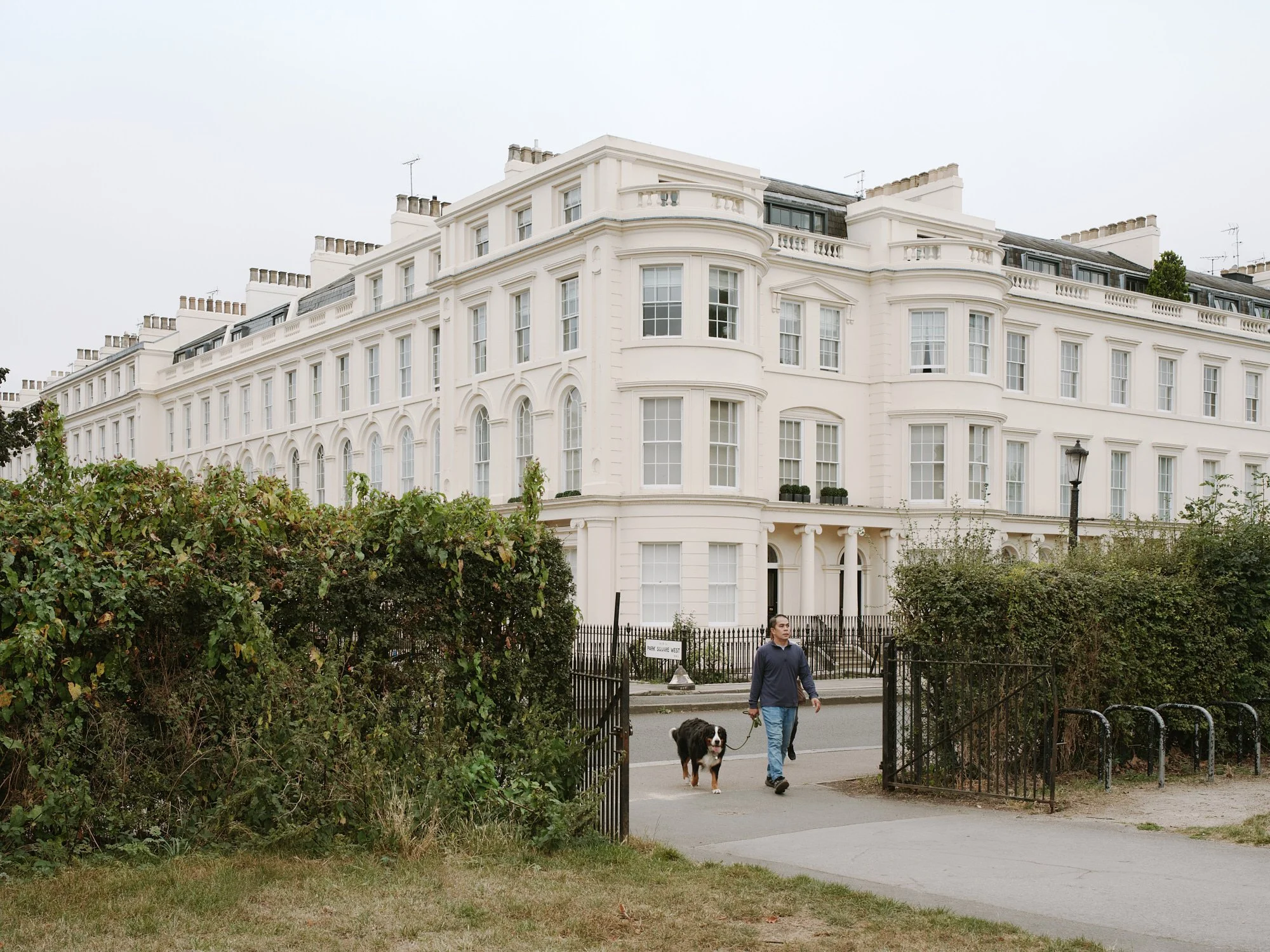
Ulster Terrace, designed by John Nash around 1824 and listed Grade I, faces Regent’s Park. Tarisio’s London headquarters occupies one of the ground floor commercial units.
Opening the workshop doors
Tarisio’s people and their way of working gave this project its character. We met with Tarisio, in conversation and on site, to understand what they needed from their new home. A key component of their brief was to demystify what they do and to make their internal processes of violin restoration more visible to visitors and potential buyers.
The more technical components of their brief included acoustic separation between the chief executive’s office and the auction gallery, so that instruments could be played and tested in each space at the same time without disruption. The brief also asked for a small acoustically isolated practice room, a secure violin store and a blackout photographic studio for photographing the instruments.
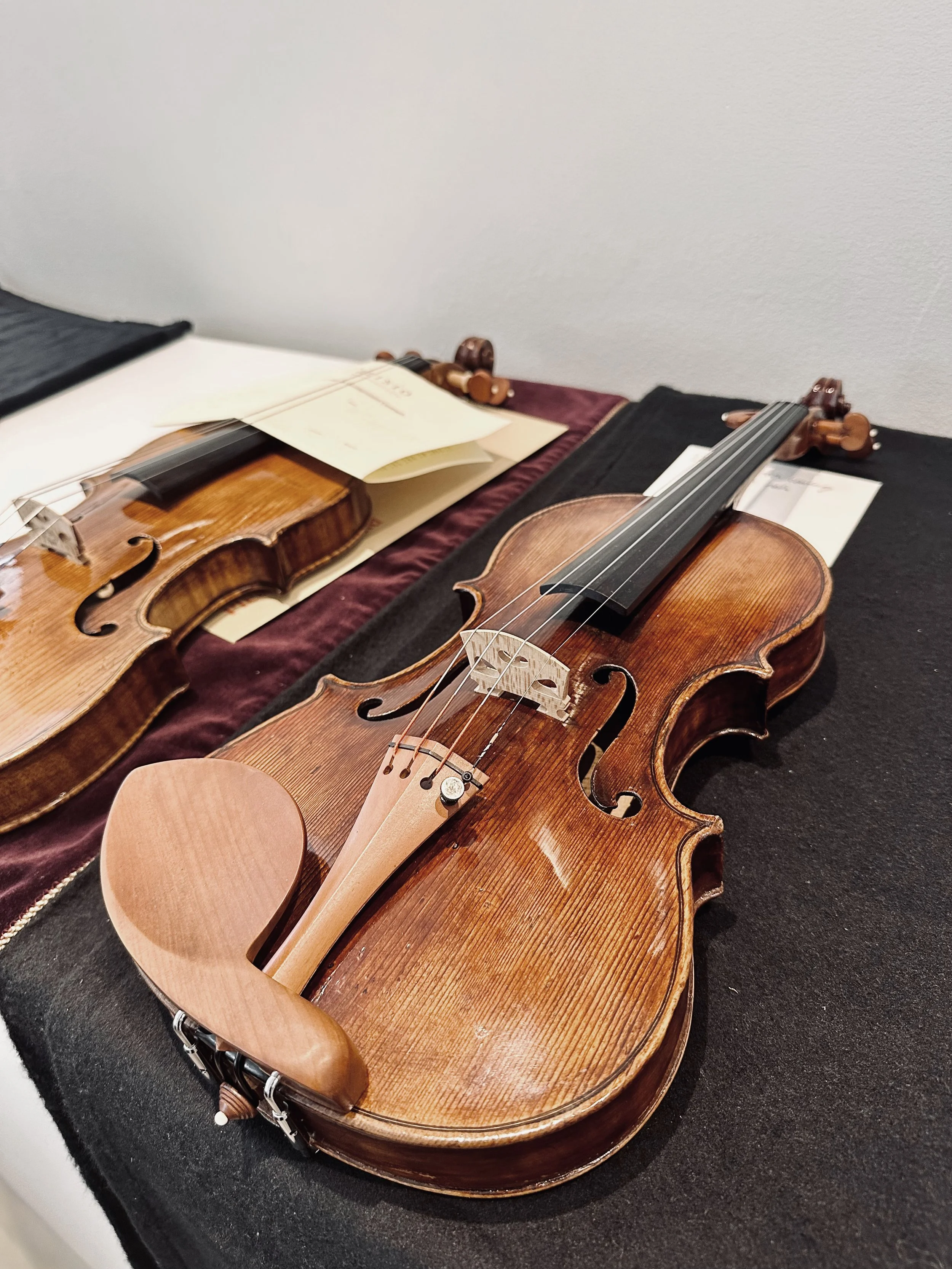
Each instrument Tarisio sells arrives with the story of who made it, who played it and where it has lived.
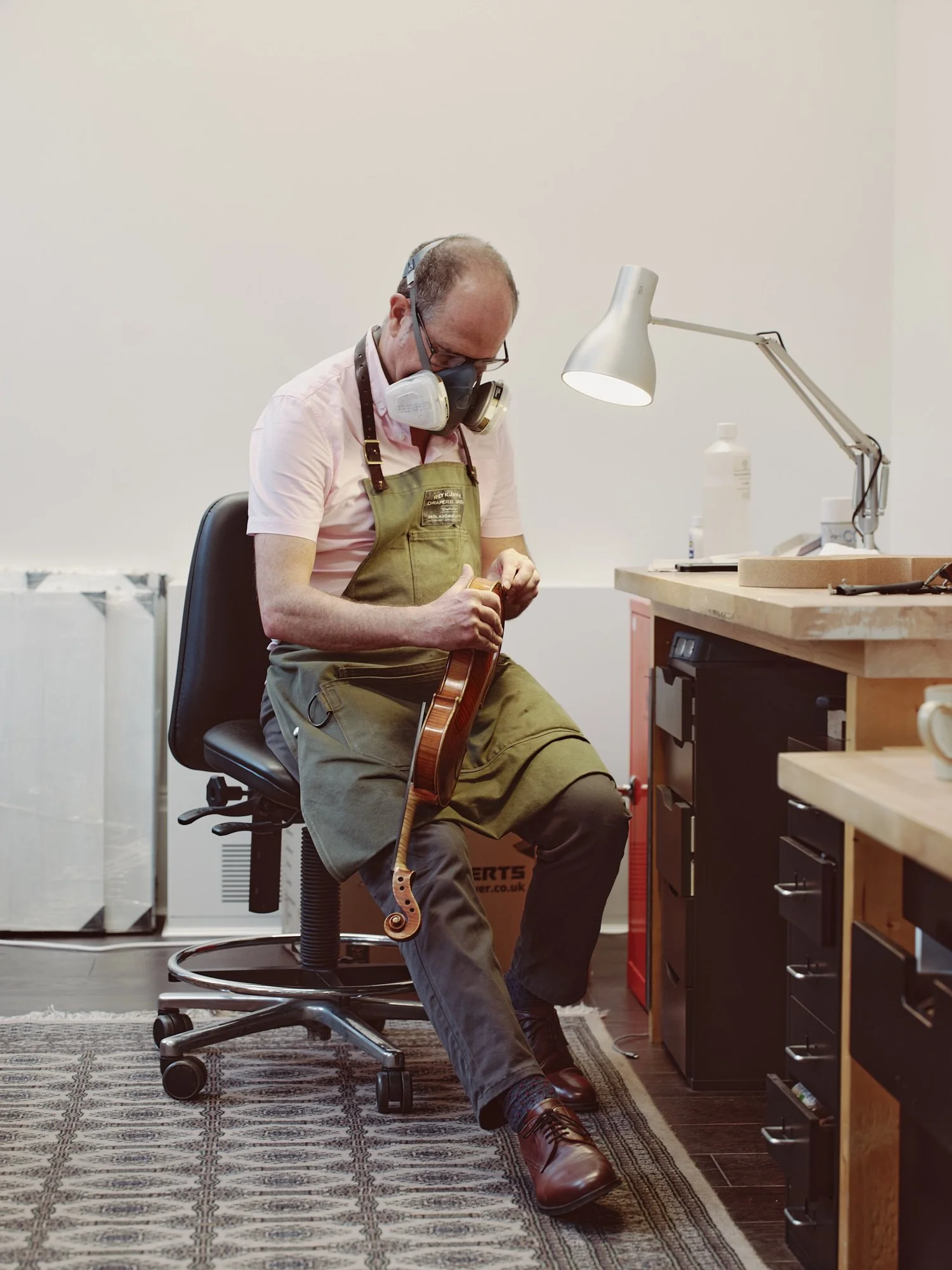
Tarisio’s luthier works beside reception behind a glazed screen, so visitors can see how instruments are restored.
From the workbench to the gallery
The plan unfolds in glimpses. Inside the entrance, a floor to ceiling glazed partition on the left shows a luthier (a maker and repairer of stringed instruments) at work on rare and antique violins and bows, so the craft of restoration is the first thing a visitor sees. To the right, a full height slot window frames a narrow view of the auction gallery beyond. A prized instrument can be hung within the slot, where it is seen from the front and the back rather than lying flat on a table or shelf.
A sweeping curved partition then draws visitors through the plan, easing them from the threshold into a central flexible space. The chief executive’s office and the auction gallery open off this space, each behind acoustically rated glass. The central space works as a waiting lobby, and it also separates the two rooms, so instruments can be played in each without disturbing the other.
Both the auction gallery and the chief executive’s office have elegant bow windows that look out onto Regent’s Park. In the auction gallery, violins sit on felt lined shelves set into arched niches. At auction time, instruments are displayed on one long table made up of several fold away tables.
On the lower ground floor, a photographic studio has blackout, light absorbing velvet curtains, and a secure violin store has felt lined shelves stacked from floor to ceiling, which protect instruments from scratches and make the most of the space. A teapoint and packing area support the working day. The acoustically isolated practice room sits on the ground floor, where it is more client facing.
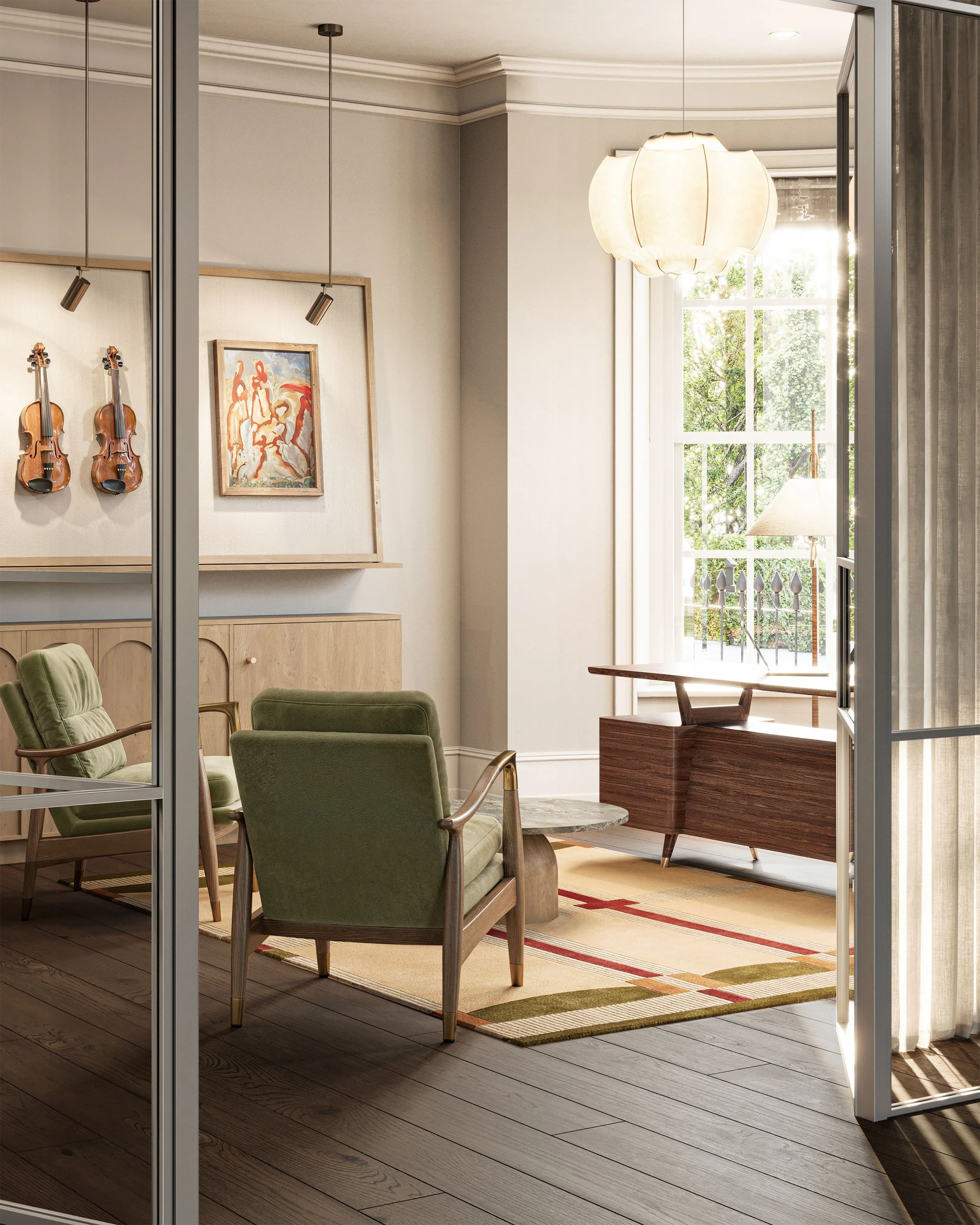
The bow window of the CEO's office looks out across Regent’s Park, and rugs rather than acoustic ceiling panels soften the sound of the room. (Design visual)
Working alongside the Cat A
The unit was pre-let while we were still delivering the Cat A refurbishment of the other commercial spaces in the building. That allowed us to work with Tarisio through a compressed and expedited concept design programme and to build their requirements into the base build as it progressed, rather than removing and redoing finished work afterwards. Their requirements included a rich, coffee coloured timber floor to set off the tone of the instruments. The chief executive joined us for the decisions about sound, because those mattered most to the business.
What a rating cannot tell you
Sound was one of the more technically demanding parts of the brief. We developed the acoustic details with an acoustic engineer, who came to site to inspect the building before and during construction to make sure the designs were executed properly. Buyers needed to be able to try an instrument in the auction gallery or in the chief executive’s office without it being heard in the next room, and the practice room needed to be acoustically isolated.
Glazing and partitions are described by a rating in dB Rw (weighted sound reduction index, a laboratory measure of how much airborne sound a partition blocks). The number is useful, but it does not tell anyone what a violin sounds like on the other side of a partition with that rating. Because perception of sound is subjective and personal, a client choosing only between ratings would be choosing blind. As the cost rises with the rating, the client could end up paying more for a product they did not need.
Listening before choosing
Because of this, we arranged a visit to the Optima acoustic partition showroom and went along with Tarisio’s chief executive and a violinist. The violinist played on one side of samples with different glazing ratings while the chief executive listened on the other.
Hearing the difference in sound transmission first hand replaced guesswork. The chief executive could decide where the extra spend was worth it, and where it was not, by ear rather than from a data sheet. The glazed partitions where music is played were rated at 40 dB Rw, and the glazing to the office space and workshop at 38 dB Rw.
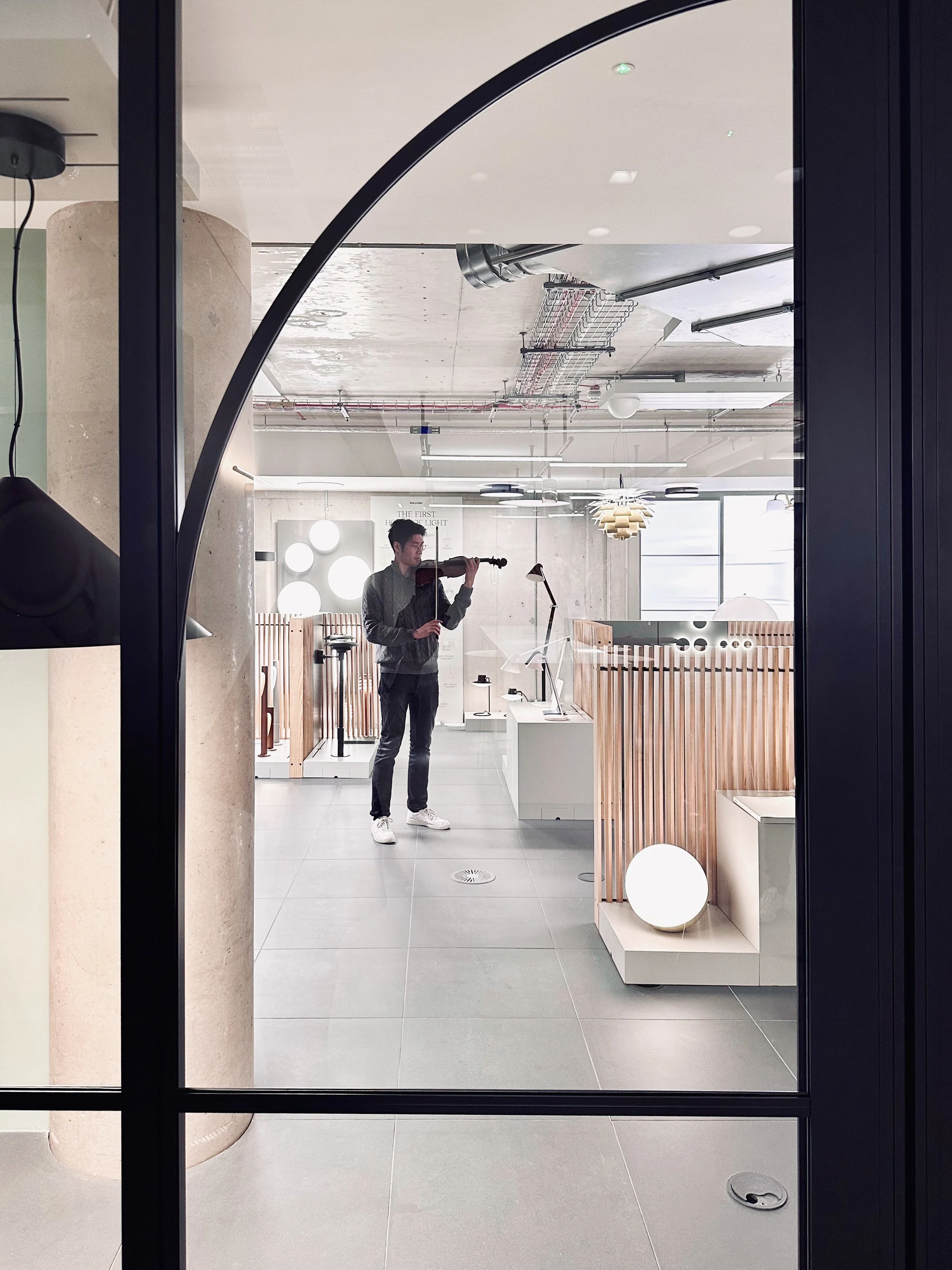
At the glazed partition showroom, a violinist played behind acoustic glazing while Tarisio’s chief executive listened on the other side, which let the choice of rating be made by ear.
Rugs, and a slightly brighter sounding room
Tarisio also had a clear view on how the rooms should sound. They preferred rugs to soften and absorb sound rather than acoustic ceiling panels, and they wanted the sound to be slightly brighter. Rugs leave the ceilings of the listed interior clear and can be moved as the use of each room changes.
A gallery that changes with the occasion
Tarisio holds its London auctions in the spring and autumn. Storage downstairs for fold away auction tables and seating lets the auction gallery change with the calendar. A few of the tables are joined together to make one long auction table. At other times of the year, the tables are cleared away and replaced with chairs for a string quartet or another musical performance, or the room is left empty for a drinks evening with canapés and a grand piano.
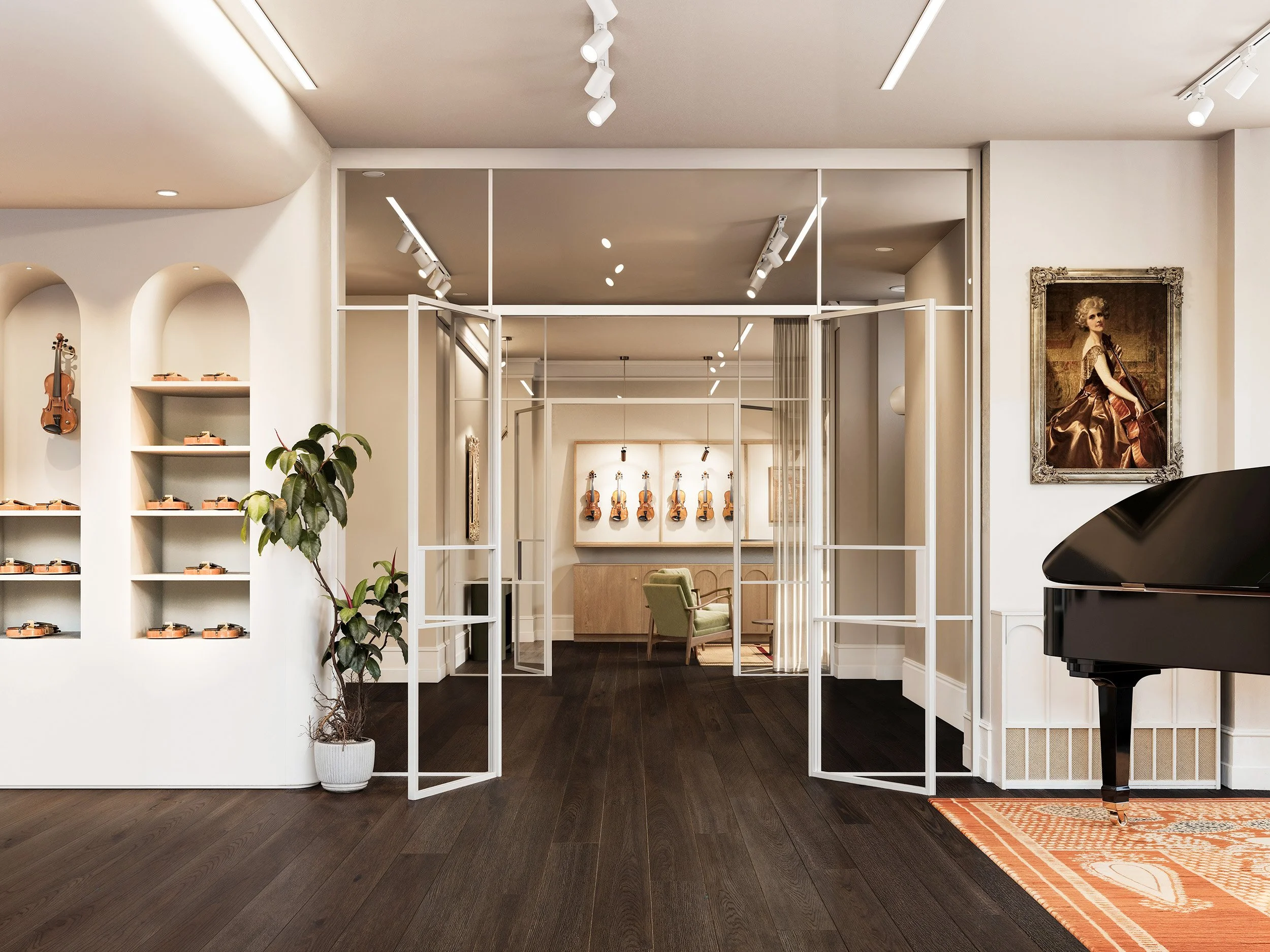
Glazed acoustically rated doors lead from the auction gallery into a central space that acts as an acoustic buffer, so instruments can be tried in the chief executive’s office beyond without sound carrying between the rooms. (Design visual)
Old instruments, old buildings
Our work begins by listening to the stories old buildings tell once layers of paint, flooring, wallpaper and partitions come away. Tarisio gives violins a new life with the same care, and each of us adds a page to a long history, so understanding their needs came naturally.
There is a pleasing symmetry in a firm that celebrates and extends the long life of old instruments choosing a practice that honours the past of old buildings while designing for the future.
Read more about the Cat A refurbishment of the remaining commercial spaces in this elegant Grade I listed building, or see the Tarisio London project page.
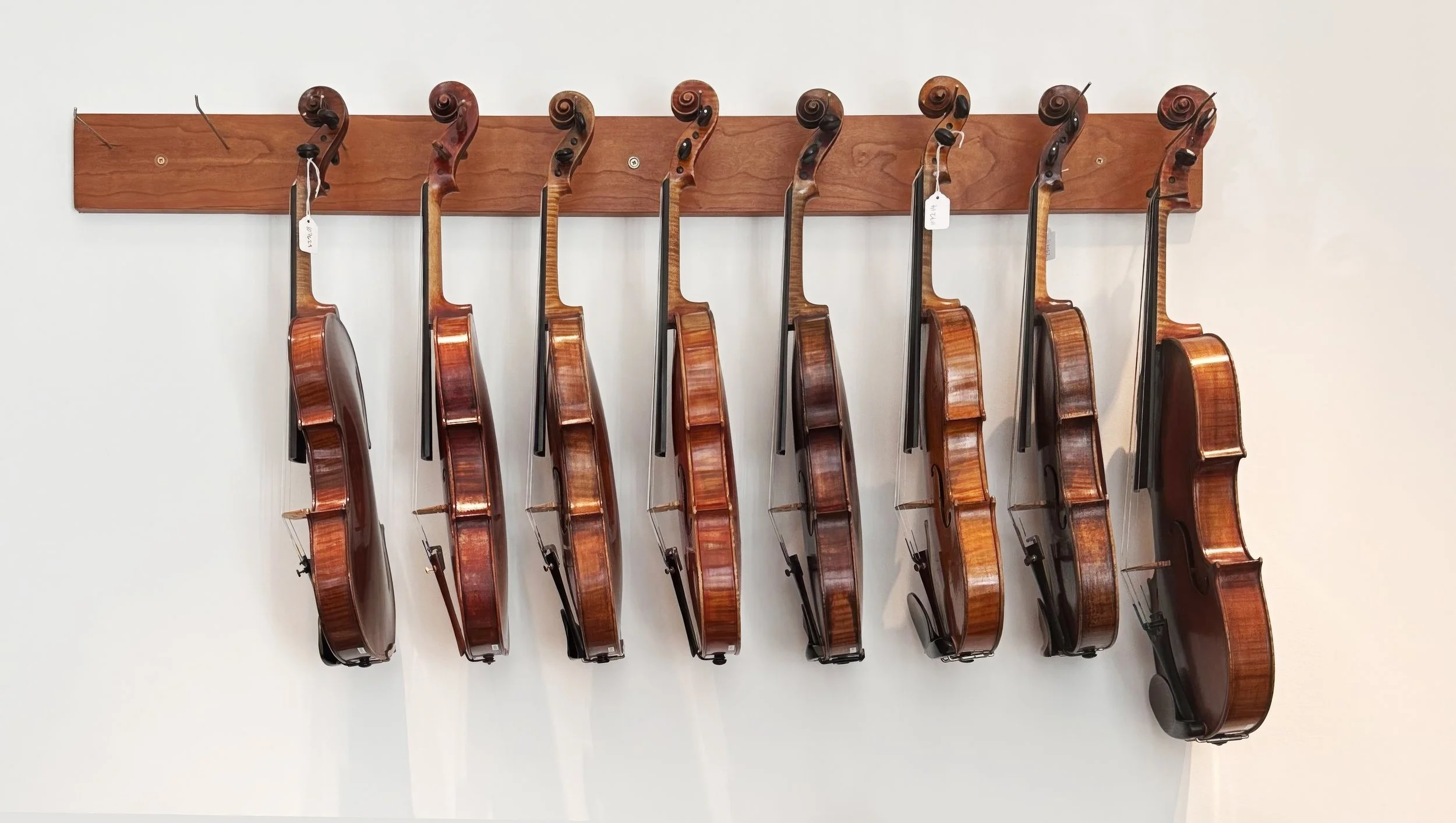
Both a building and a Tarisio violin change over their long lives, marked and changed by the people who have used, repaired and cared for them.
Frequently asked questions
Who is Tarisio?
Tarisio is an international auction house and private sales venue for fine stringed instruments and bows, with offices in New York, London and Berlin.
Who designed Ulster Terrace?
John Nash designed the terrace around 1824 as part of the Regent’s Park Crown Estate, and it is listed Grade I.
How did the Cat B fit out work alongside the Cat A refurbishment?
The unit was pre-let, so Tarisio’s requirements were built into the base build as it progressed, through a compressed concept design programme, rather than finished work being removed and redone.
How were the glazing ratings for Tarisio’s rooms chosen?
We developed the details with an acoustic engineer, then took Tarisio’s chief executive and a violinist to an acoustic partition showroom to hear the difference between ratings. The partitions where music is played are rated at 40 dB Rw, and the glazing to the office space and workshop at 38 dB Rw.
Why does a higher acoustic rating not always make sense?
Cost rises with each step up in rating, and the step that matters depends on how a room is used. Listening to a violin played on either side of acoustically rated glass let the client choose where the extra spend was worth it.
How is sound kept apart between rooms?
The chief executive’s office and the auction gallery open off a central lobby and are separated by acoustically rated glass, so instruments can be played in each without disturbing the other. The practice room is acoustically isolated.
Can the auction gallery host concerts?
Yes. The fold away auction tables are stored downstairs, so the gallery can be cleared and set with chairs for a string quartet.
What was the practice’s role?
We delivered the Cat B fit out through RIBA stages 1 to 7.
What does a luthier do?
A luthier makes and repairs stringed instruments, and at Tarisio’s London home the luthier works beside reception, in view of visitors.