
Restoring a Camberwell Grove Façade and adding space: a Conservation Area Negotiation
Camberwell Grove Conservation Area · London Borough of Southwark · SE5
When we were appointed to work on this elegant Georgian semi-detached home in the Camberwell Grove Conservation Area, the property's facade was raw London stock brick, visibly out of step with its rendered semi-detached partner and the matching Grade II listed pair two doors away. The owner wanted to be a respectful guardian of the building and to make it look right again. The brief was modest: re-render the front in breathable lime, paint the timber sash windows in a dark heritage green, replace a non-original Victorian rear staircase, and add a side dormer at loft level to balance the existing dormer on the attached neighbour. The Conservation Area Appraisal identifies the property as an unlisted building of merit and a positive contributor to the area. That status carries weight. It also raises the bar.
The strongest planning arguments are historic evidence
The strongest planning arguments for proposed works in a Conservation Area are usually the ones grounded in evidence the council has not yet been shown. At an early nineteenth-century semi-detached villa in the Camberwell Grove Conservation Area, the evidence sat in the archives. A 1946 photograph from the London Picture Archive showed the property with its original stucco render and decorative banding intact. The Bomb Damage Map of 1939–1947 recorded a bomb strike just to the north of the site. Aerial photography from the post-war years and historic maps from the 1830s, 1860s and 1880s allowed the original character of the building, and the date range within which the render was lost, to be established with confidence.
planning conditions & phasing the works
Once the Conservation Officer accepted the rendering of the facade, they wanted multiple enlarged details of all junctions and a full specification prior to granting the final approval. To avoid holding up the approval, we were able to agree that this be added as a planning condition prior to commencement of rendering the facade only, allowing unrelated aspects of the permission without conditions to commence earlier and more quickly.
A SECOND APPLICATION
A second application was made later to widen the dormer at the rear of the property, leaving the Camberwell Grove front elevation works entirely unchanged. To support this change, photographic massing studies were prepared by 4SA of key street and mews views that the case officer had highlighted in earlier applications as being critical. These studies were able to demonstrate that the proposed works would not negatively impact the surrounding Conservation Area.
This project is one example of 4SA's conservation architecture in Southwark's Camberwell, Dulwich and Herne Hill heritage areas.
client testimonial
"4SA were an inspirational partner in planning my extension and an invaluable intermediary in getting permission for it from the council. I thoroughly looked forward to meetings with Julia, where she patiently considered all my thoughts for the extension, gently worked them into a vastly better vision, and presented impeccable documents at every step of the way. So glad to have chosen 4SA — highly recommended."
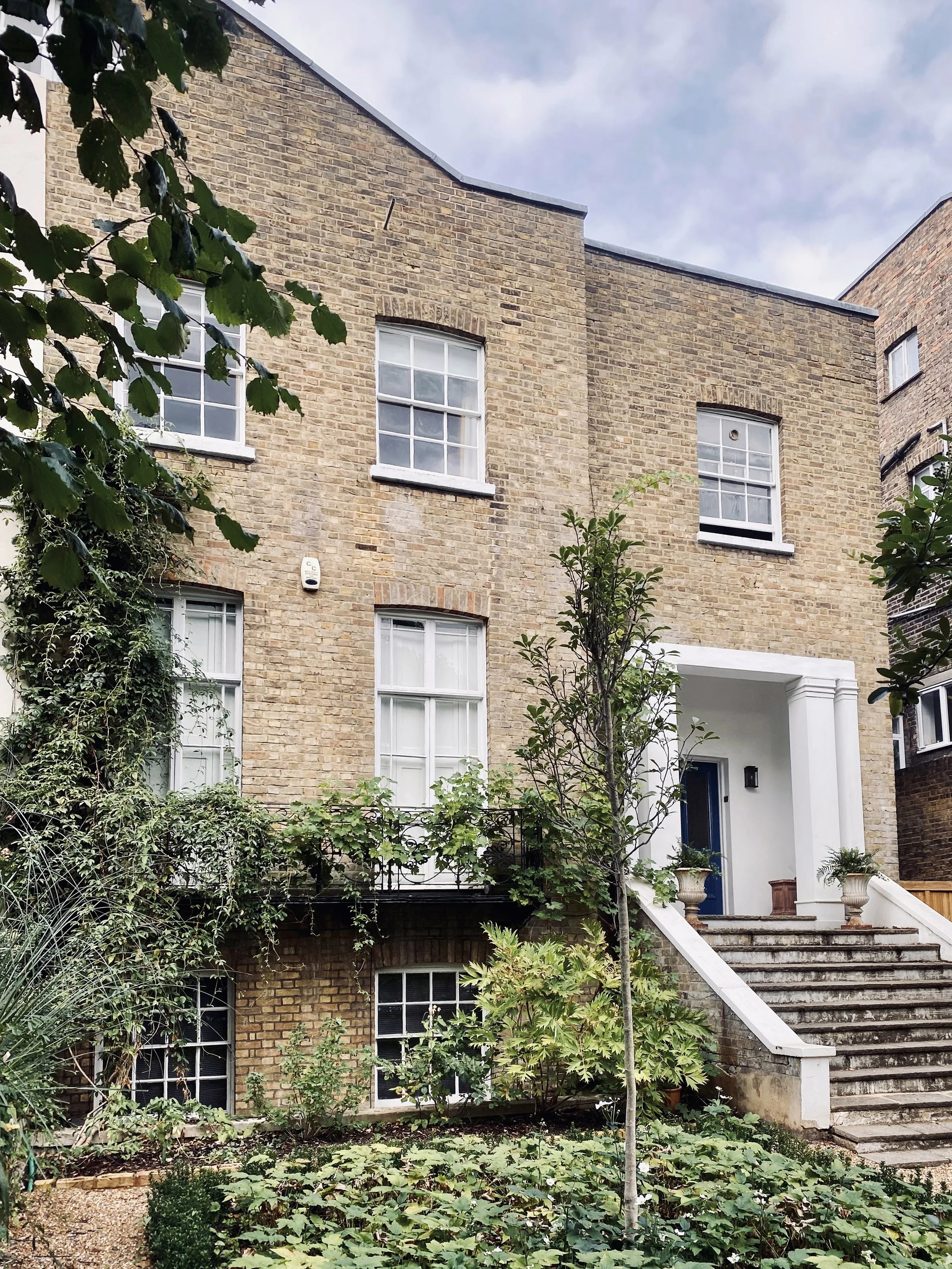
Brick facade stripped of original render Image credit: 4SA
Frequently Asked Questions
Can I get a loft extension in the Camberwell Grove Conservation Area? It depends on the property. The Conservation Area Appraisal states that roof extensions are generally unacceptable and that approval is more likely where the roof is already altered or hidden from view. Each property is judged on its own circumstances. The Appraisal is the document to read first, and a simple pre-application enquiry is the best way to establish the principle before investing in a full submission.
My property is unlisted. Does that make planning easier? Typically yes, but properties identified in a Conservation Area Appraisal may be noted as unlisted buildings of merit, or as positive contributors to the Conservation Area, meaning design proposals will be just as scrutinised. Additionally, the impact of your proposed works on any near by listed properties will be assessed. What changes is the consent regime: listed building consent is not required.
The Conservation Officer has objected to my application. What now? An objection is a position, not a decision. The case officer takes the Conservation Officer's view alongside other consultee responses and policy considerations. Targeted revisions, supported by archival or site-specific evidence, are often the route that converts an objection.
Can I re-render a brick façade in a Conservation Area? Section 5.2.7 of the Camberwell Grove Conservation Area Appraisal lists painting or rendering facing brickwork among the alterations the council generally resists. Where archival evidence demonstrates that the brick was not the original face, the position changes. Lime-based render, breathable, in a colour drawn from the area's historic palette, is the appropriate specification. Cement render is not.
What colour can I paint my windows in the Camberwell Grove Conservation Area? The Conservation Area Appraisal section suggests darker heritage colours such as navy, maroon, wine green and black, and discourages garish colour and brilliant white. Historic photographs of the property itself or of comparable properties on the same street are the strongest evidence base for a light or dark colour decision.
How long does this kind of planning process take? Most householder applications in Southwark are determined within eight to twelve weeks. Where revisions are required in response to Conservation Officer comments, the timeline can extend. A pre-application enquiry, taken before the formal submission, often shortens the overall process and reduces the risk of an unexpected objection.